
 Tiếng Việt
5 MODERN INTERIOR CEILING DESIGN TRENDS: BEAUTIFUL, DURABLE AND EASY TO MAINTAIN
In modern interior design, ceilings are no longer just a way to conceal technical systems above. A well-designed ceiling can make a space feel larger, brighter, more sophisticated, and more efficient throughout its lifecycle.
For homes, ceilings contribute to comfort and reflect the homeowner’s lifestyle. For offices, showrooms, restaurants, hotels, and commercial buildings, ceiling design directly impacts customer experience, brand identity, and long-term maintenance costs.
As a result, today’s interior ceiling design trends focus not only on aesthetics but also on functionality and durability.

Beautiful ceilings upgrade your entire non-existent space (Source: Internet)
A well-designed ceiling system offers multiple benefits:
- Conceals electrical, HVAC, and technical systems.
- Enhances overall interior aesthetics.
- Improves acoustic and thermal performance.
- Supports effective lighting design.
- Simplifies maintenance and future upgrades.
That is why modern ceiling design emphasizes beauty, practicality, and long-term performance.
I. Minimalist Flat Ceilings – Timeless Elegance for Modern Spaces
Minimalist flat ceilings are among the most popular choices for houses, apartments, offices, and modern commercial spaces. This ceiling style is characterized by a smooth, flat surface, clean lines, minimal decorative details, and the flexibility to complement a wide range of interior design styles.
Instead of incorporating multiple ceiling levels or intricate decorative patterns, flat ceilings focus on simplicity, continuity, and creating a sense of openness.

Concealed gypsum ceiling for modern interiors (Source: Internet)
1. Why Are Minimalist Flat Ceilings So Popular?
Flat ceilings align well with contemporary interior design trends thanks to their clean appearance, bright atmosphere, and versatility. In spaces with limited or moderate floor areas, this ceiling style helps reduce visual heaviness while creating the impression of greater ceiling height.
Key advantages include:
- Smooth, seamless, and modern ceiling surfaces.
- Easy integration with various interior design styles.
- Compatible with recessed lighting, track lighting, and linear lighting systems.
- Makes spaces appear larger, neater, and more open.
- Less likely to become outdated compared to heavily decorative ceiling designs.
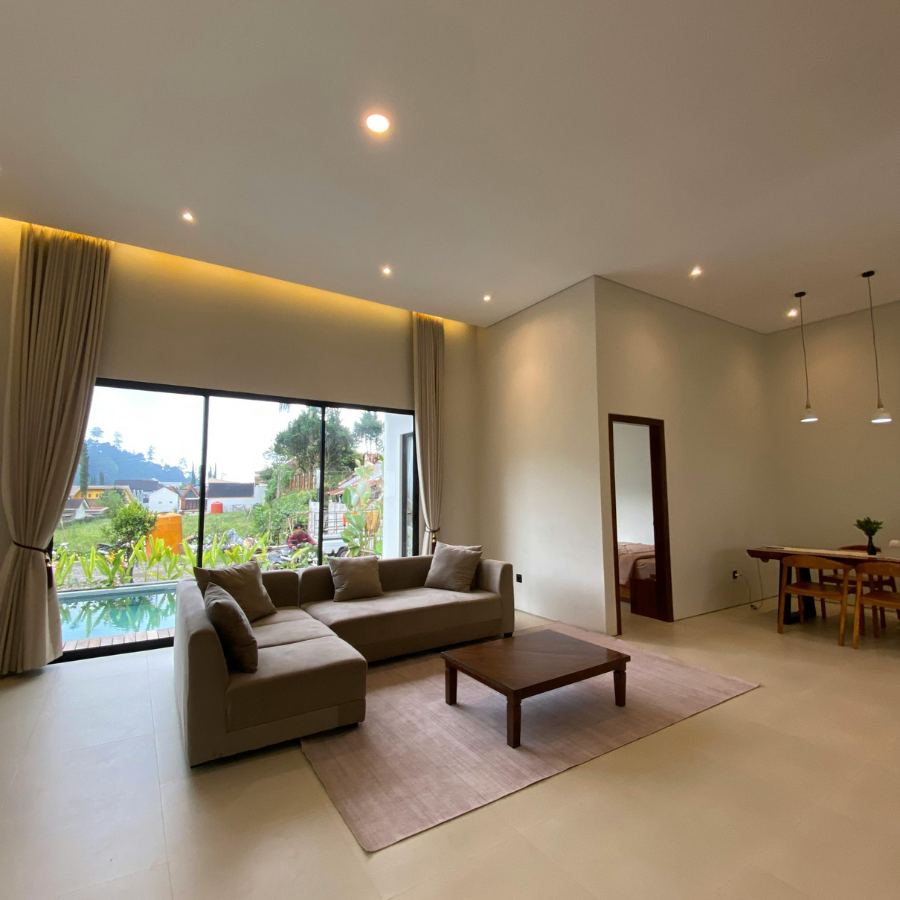
Flat ceiling design for living rooms (Source: Internet)
2. The Importance of the Ceiling Framing System
To achieve a beautiful and long-lasting flat ceiling, the framing system behind the ceiling plays a critical role. If the framing system lacks strength, consistency, or is installed incorrectly, the ceiling surface may sag, develop joint cracks, or become uneven over time.
For projects that require a seamless ceiling finish, a high-quality concealed ceiling framing system serves as the foundation for ensuring flatness, structural stability, and the long-term durability of the entire ceiling system.
Suitable for: apartments, townhouses, villas, offices, meeting rooms, and modern showrooms.
II. Decorative Suspended Ceilings – Creating Visual Impact While Remaining Easy to Maintain
While suspended ceilings were traditionally used in offices, schools, and public buildings, modern solutions have evolved with decorative ceiling panels featuring a wider variety of colors, patterns, and surface finishes.
Today, suspended ceilings are no longer just a way to conceal building services and technical systems. They can also serve as a key aesthetic feature that enhances the overall interior design.
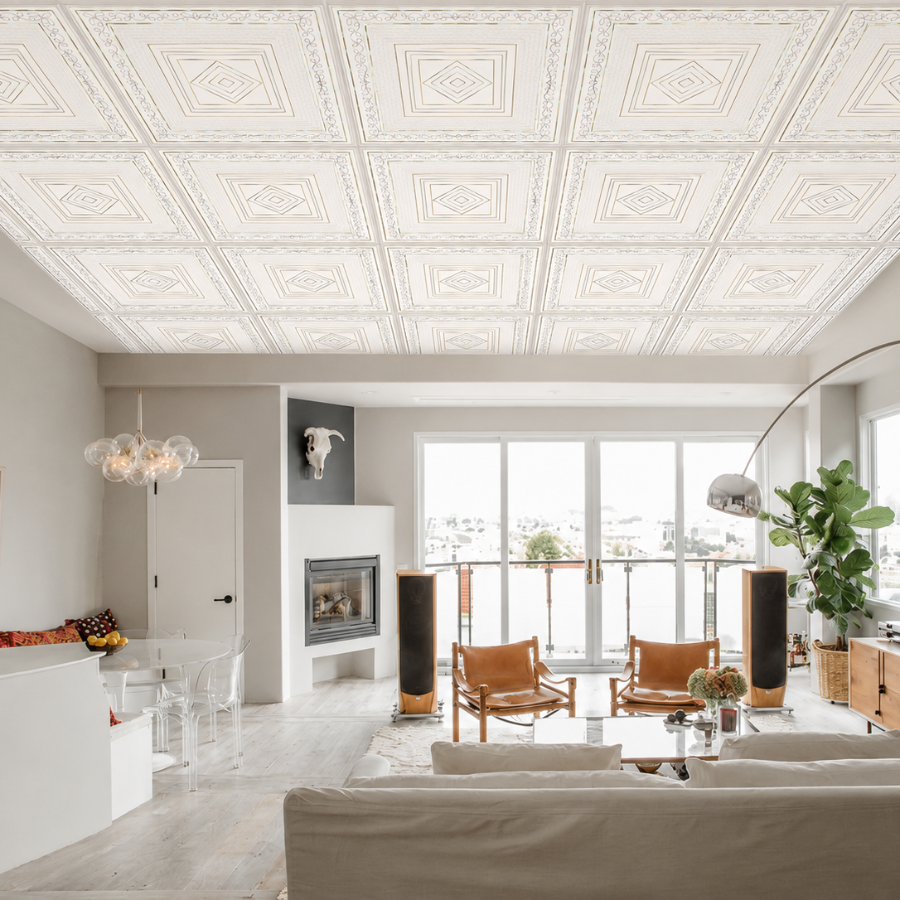
Decorative suspended ceiling solution for residential spaces (Source: Internet)
1. From Traditional Suspended Ceilings to Decorative Ceiling Systems
Modern decorative ceiling panels can create a variety of visual effects, including metallic finishes, decorative patterns, reflective surfaces, and designs tailored to different interior styles.
As a result, suspended ceilings are now widely used in spaces that require a higher level of aesthetics, such as:
- Office reception areas.
- Product showrooms.
- Restaurants, cafés, and hotels.
- Shopping malls.
- Meeting rooms and guest lounges.
- Apartments and residential spaces that require a focal design feature.
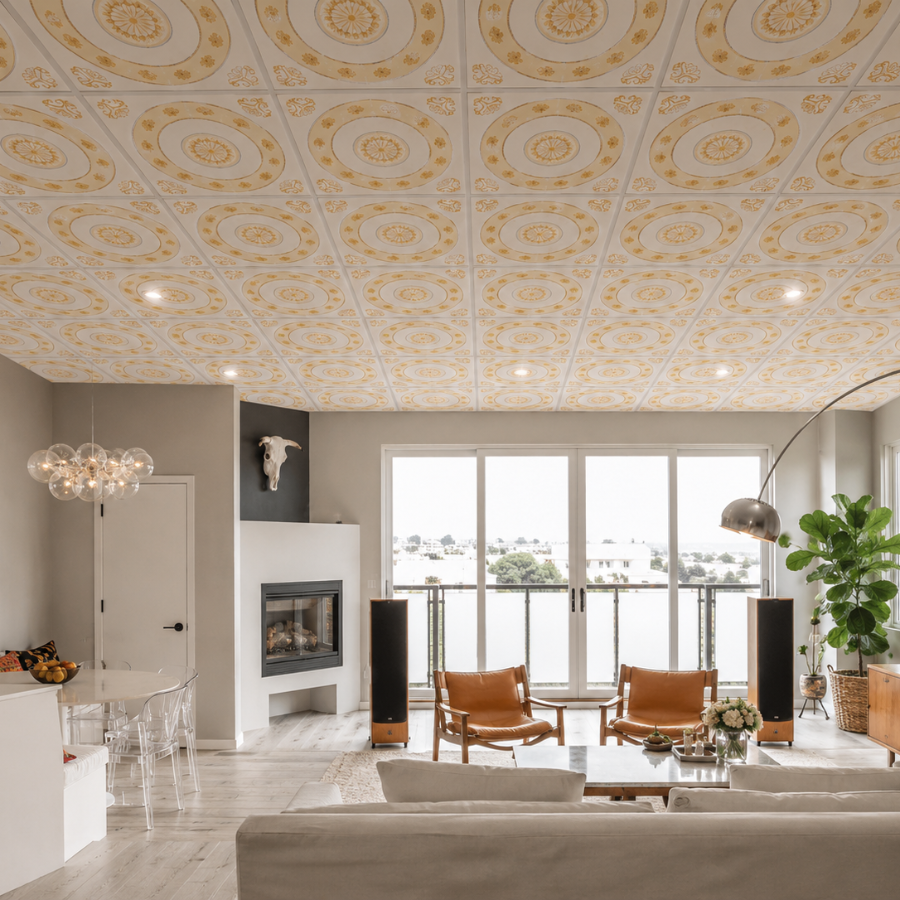
Decorative ceiling design for bedrooms (Source: Internet)
The Biggest Advantage: Easy Installation and Replacement
Ưu điểm nổi bật của trần thả là khả năng tháo lắp từng tấm riêng lẻ. Khi cần kiểm tra hệ One of the key benefits of suspended ceilings is the ability to remove and reinstall individual ceiling panels. When maintenance is required for electrical systems, air-conditioning, cameras, piping, or other services above the ceiling, maintenance teams can easily access these areas without dismantling the entire ceiling system.
This is a significant advantage for commercial buildings, where fast maintenance and minimal operational disruption are always top priorities.
Practical benefits include:
- Fast installation over large areas.
- Easy replacement of individual panels when needed.
- Convenient access to building services above the ceiling.
- Flexible panel replacement for interior upgrades and renovations.
- Reduced maintenance costs throughout the building lifecycle.
For projects with higher aesthetic requirements, ProMETAL decorative ceiling panels can be combined with a compatible exposed ceiling grid system to achieve both strong visual appeal and the maintenance flexibility that suspended ceilings are known for.
Suitable for: offices, showrooms, restaurants, hotels, schools, hospitals, and shopping malls.
III. Multi-Level Ceilings – Creating Depth and Defining Spaces
Multi-level ceilings remain one of the most popular solutions in modern gypsum ceiling design. Unlike flat ceilings, multi-level ceilings utilize different ceiling heights to create depth, define functional areas, and enhance the overall aesthetic appeal of a space.
When designed with the right proportions, multi-level ceilings can make a space feel more elegant, visually engaging, and less monotonous.
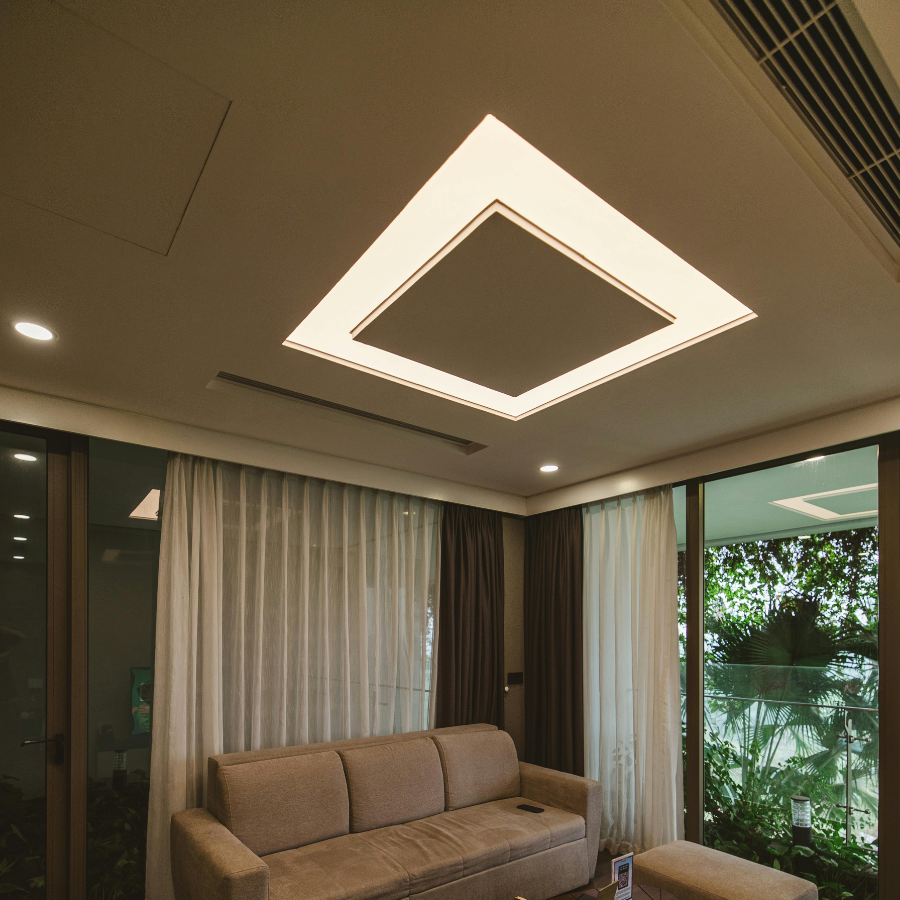
Multi-level ceiling design that adds depth to a space (Source: Internet)
1. Advantages of Multi-Level Ceilings
Multi-level ceilings offer several visual benefits:
- Create a greater sense of depth and dimension.
- Help define functional areas naturally.
- Add visual interest to living rooms, lobbies, and central gathering spaces.
- Easy to integrate with concealed LED lighting.
- Suitable for a wide range of styles, from modern to luxurious.
However, multi-level ceilings should be designed carefully. Excessive layering, overly complex details, or proportions that do not suit the room height can make a space appear cluttered and visually lower than it actually is.
2. Popular Multi-Level Ceiling Designs
Depending on the design concept, multi-level ceilings can be implemented in various forms, such as:
- Simple single-level drop ceilings.
- Double-level ceilings that create additional depth.
- Multi-level ceilings combined with concealed LED lighting.
- Framed ceiling designs with decorative borders.
- Multi-level ceilings featuring a central decorative element.
For homes and apartments with moderate floor areas, light ceiling drops and clean lines are generally recommended. For hotel lobbies, showrooms, and restaurants, more dramatic ceiling levels can be used to create a stronger architectural statement.
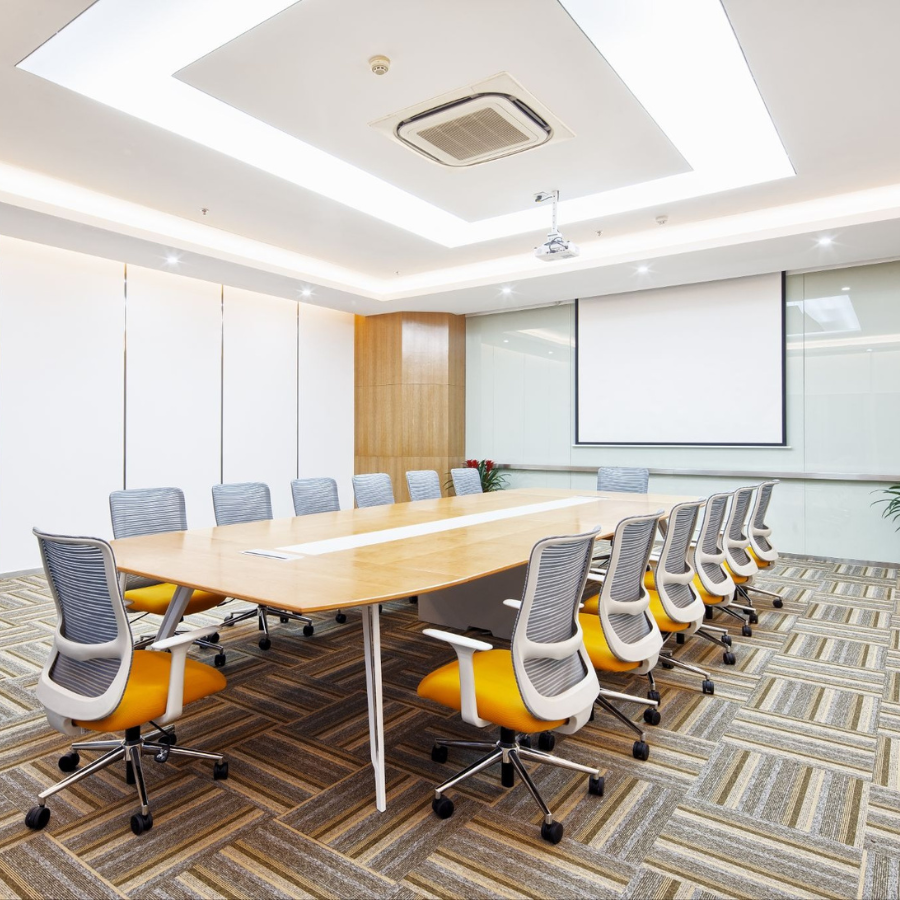
Multi-level ceiling design for office spaces (Source: Internet)
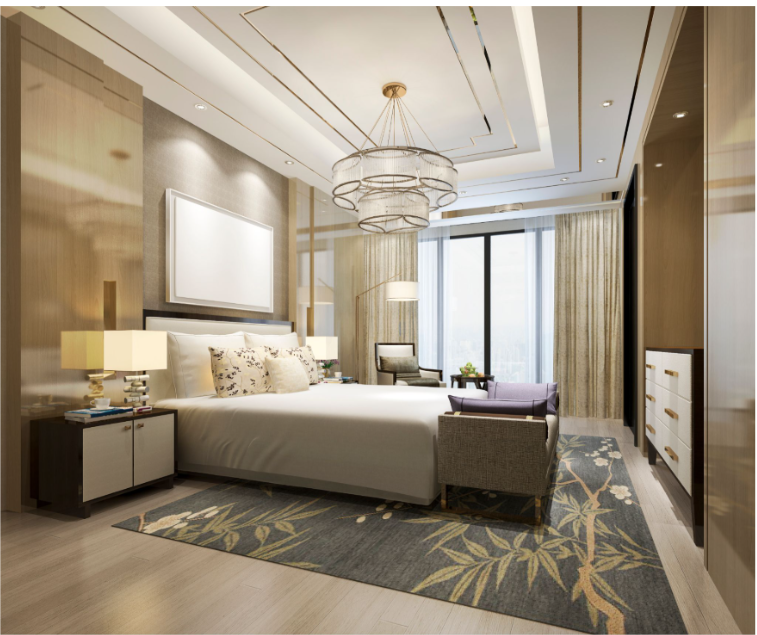
Multi-level ceiling combined with concealed LED lighting (Source: Internet)
3.Technical Considerations for Multi-Level Ceiling Installation
Because multi-level ceilings contain more details than flat ceilings, they require a strong framing system and precise installation. Transition areas, corners, lighting recesses, and decorative edges must be carefully executed to minimize the risk of cracking, sagging, or uneven surfaces after completion.
A coordinated framing system, standard-compliant accessories, and a well-defined installation process will help ensure better durability and long-term performance.
Suitable for: living rooms, reception lobbies, restaurants, hotels, showrooms, and premium meeting rooms.
IV. Ceilings Combined with Indirect Lighting – Enhancing the Atmosphere of Interior Spaces
Lighting plays an essential role in interior ceiling design. Rather than relying solely on direct lighting, many modern projects incorporate indirect lighting to create a softer, more relaxing, and more sophisticated ambiance.
Indirect lighting is typically integrated into ceiling recesses, ceiling grooves, stepped ceiling edges, or concealed locations. Instead of shining directly into the eyes, the light reflects off ceiling or wall surfaces, producing a gentle effect with added depth.
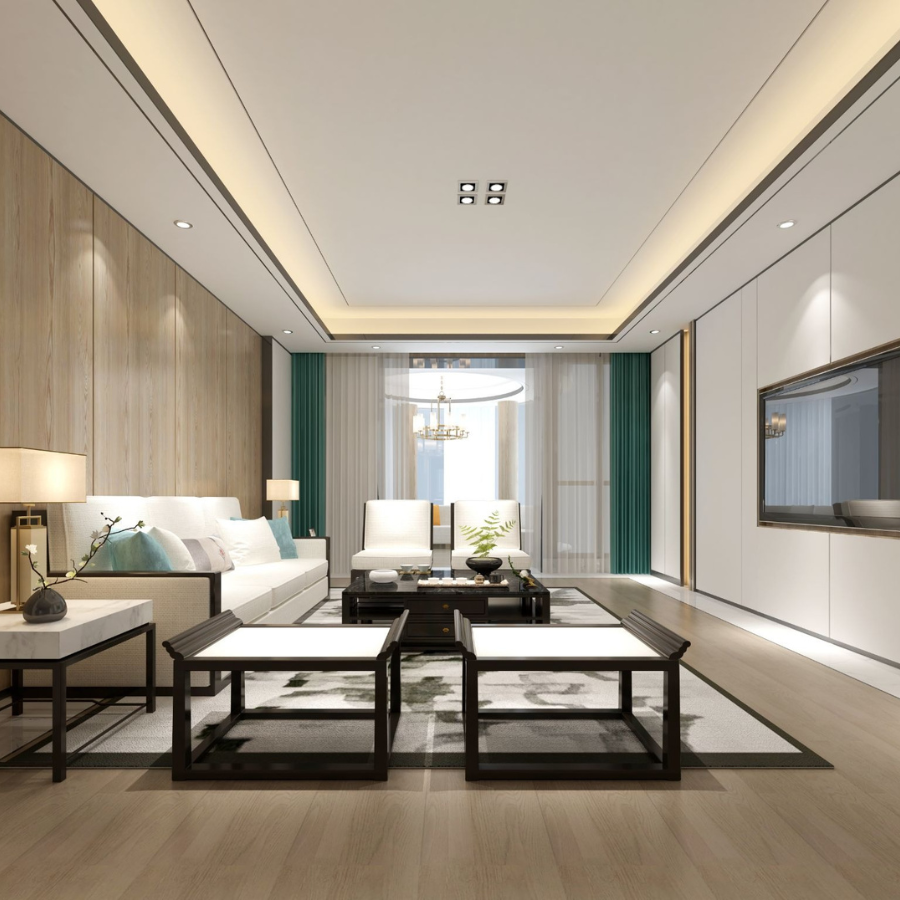
Ceiling design with indirect lighting to create depth in residential spaces (Source: Internet)
1. Why Is Indirect Lighting So Popular?
Indirect lighting helps create a more engaging and emotional atmosphere. In living rooms, cove lighting can create a warm and inviting environment. In showrooms, well-planned lighting can highlight products effectively. In hotels and restaurants, indirect lighting contributes to a luxurious and relaxing experience.
Key benefits include:
- Reduces glare and visual discomfort.
- Creates a softer and more comfortable environment.
- Highlights architectural features and design details.
- Adds depth to ceilings and walls.
- Helps define functional areas through lighting.
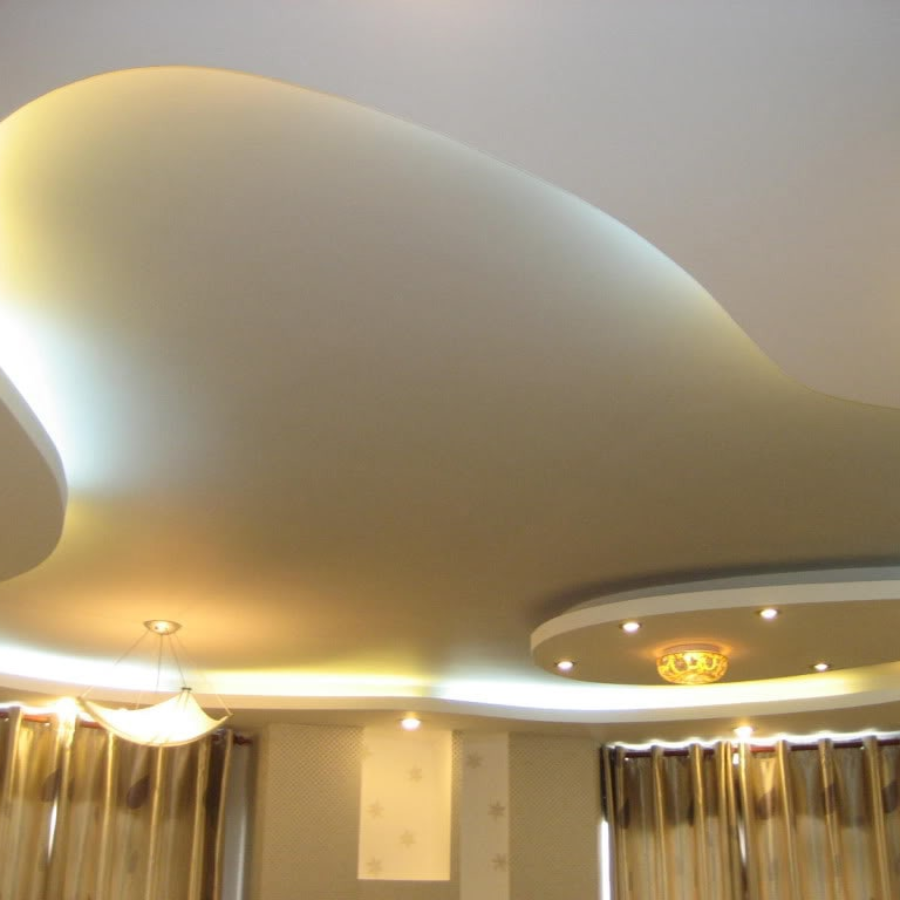
Ceiling design with indirect lighting to create depth in residential spaces (Source: Internet)
2. Combining Lighting with the Right Ceiling Design
Indirect lighting can be incorporated into a variety of ceiling designs, including:
- Flat ceilings with linear lighting slots.
- Multi-level ceilings with concealed LED lighting.
- Decorative ceilings in reception and guest areas.
- Corridor, lobby, and transitional space ceilings.
- Showroom ceilings designed to enhance visual experiences.
During the design stage, lighting locations, power supply requirements, technical access points, and maintenance strategies should be planned from the outset. This helps prevent costly ceiling modifications after installation is completed.
Suitable for: luxury residences, modern apartments, showrooms, hotels, restaurants, and corporate offices.
V. Sustainable and Easy-to-Maintain Ceilings – A Key Trend for Long-Term Building Performance
Beyond aesthetics, building owners and developers are increasingly focused on long-term operational costs. A ceiling that looks attractive at handover is not enough. It must also remain stable, easy to maintain, require minimal repairs, and perform well under real-world environmental conditions.
This is why sustainable and easy-to-maintain ceiling systems are becoming a growing priority in residential, office, and commercial projects.
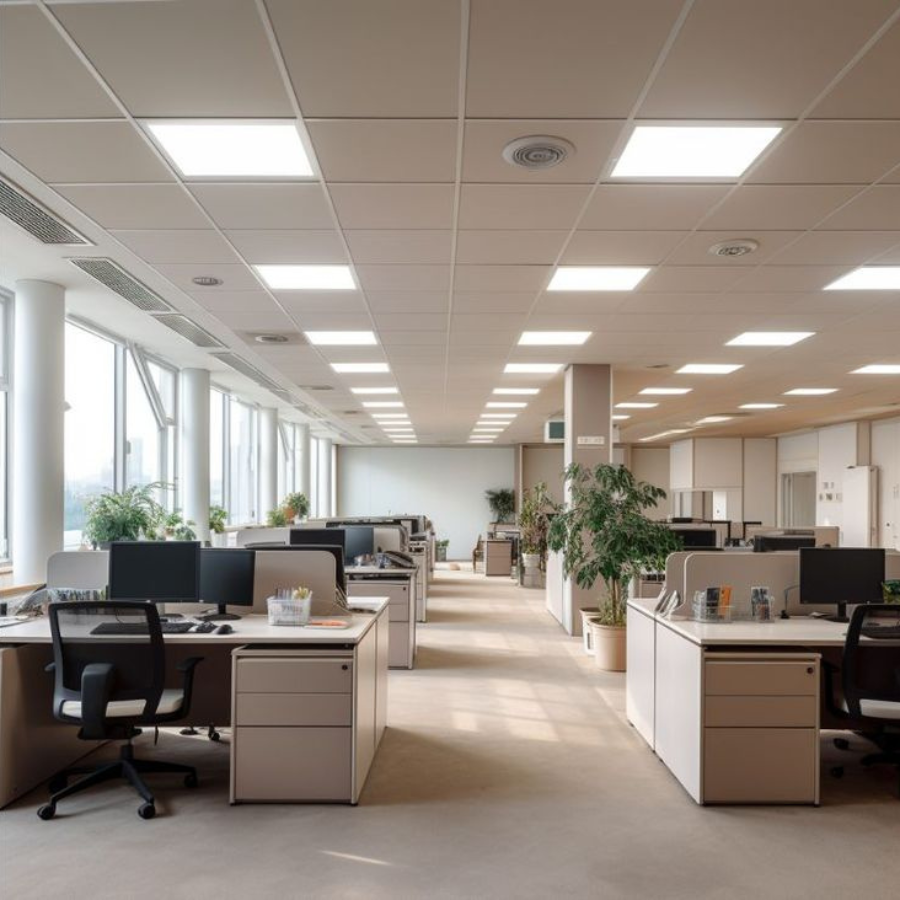
Sustainable and easy-to-maintain ceiling solutions (Source: Internet)
1. Investing in Durability Rather Than Initial Cost Alone
A ceiling system with a lower upfront cost but prone to sagging, cracking, corrosion, or difficult maintenance may result in significantly higher lifecycle costs. In contrast, selecting the right framing system, ceiling panels, and accessories from the beginning can greatly reduce repair and maintenance expenses over time.
A sustainable ceiling system should meet the following criteria:
- A stable framing system designed for the required load capacity.
- Materials with strong moisture and corrosion resistance.
- Coordinated accessories and secure connections.
- Easy access to building services for maintenance.
- Proper installation according to the specific ceiling type.
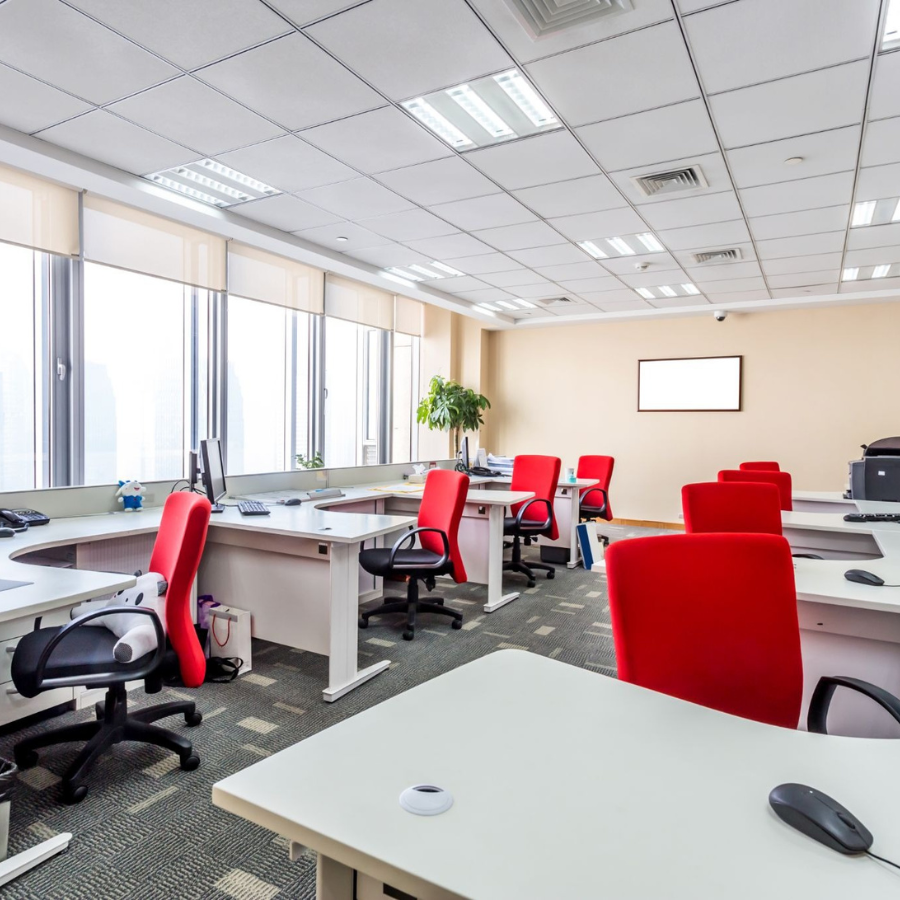
Contractors prioritize high-quality ceiling framing systems (Source: Internet)
2. The Role of the Framing System in Ceiling Lifespan
Whether using concealed ceilings, suspended ceilings, multi-level ceilings, or decorative ceiling systems, the framing structure remains the primary load-bearing component. If the framing system is weak or improperly installed, issues such as ceiling sagging, joint cracking, uneven surfaces, or vibration may occur during use.
A high-quality framing system helps to:
- Maintain the stability of the entire ceiling system.
- Reduce the risk of sagging and cracking over time.
- Improve corrosion resistance in hot and humid environments.
- Support inspection, maintenance, and project handover requirements.
- Extend the overall service life of the building.
This principle forms the foundation of ProMETAL’s integrated ceiling framing solutions, designed to meet the needs of a wide range of construction projects across Vietnam.
Suitable for: commercial buildings, offices, hotels, hospitals, schools, shopping malls, and high-end residential developments.
VI. Suggestions for Choosing Ceiling Solutions by Project Type
Each type of project has different requirements in terms of aesthetics, functionality, budget, and maintenance. Therefore, ceiling selection should not be based solely on appearance but also on practical usage needs.
| Project Type | Suitable Ceiling Trend | Recommended Solution |
| Residential Homes, Apartments | Minimalist concealed ceilings | Prioritize clean designs that are easy to coordinate with interior styles |
| Villas, Penthouses | Multi-level ceilings, decorative ceilings, indirect lighting | Create focal points in living rooms, foyers, and dining areas |
| Offices | Suspended ceilings, flat ceilings, easy-maintenance ceilings | Prioritize easy access to building services and technical systems |
| Showrooms | Decorative ceilings, indirect lighting, metallic ceilings | Enhance brand experience and visual impact |
| Restaurants, Hotels | Multi-level ceilings, decorative ceilings, cove lighting | Create ambiance, depth, and a sense of luxury |
| Schools, Hospitals | Suspended ceilings, durable and easy-to-maintain ceiling systems | Prioritize durability, hygiene, and long-term operation |
| Shopping Centers | Suspended ceilings, decorative ceilings, easy-maintenance ceiling systems | Fast installation, easy replacement, and convenient access for maintenance |
VII. Common Mistakes to Avoid in Interior Ceiling Design
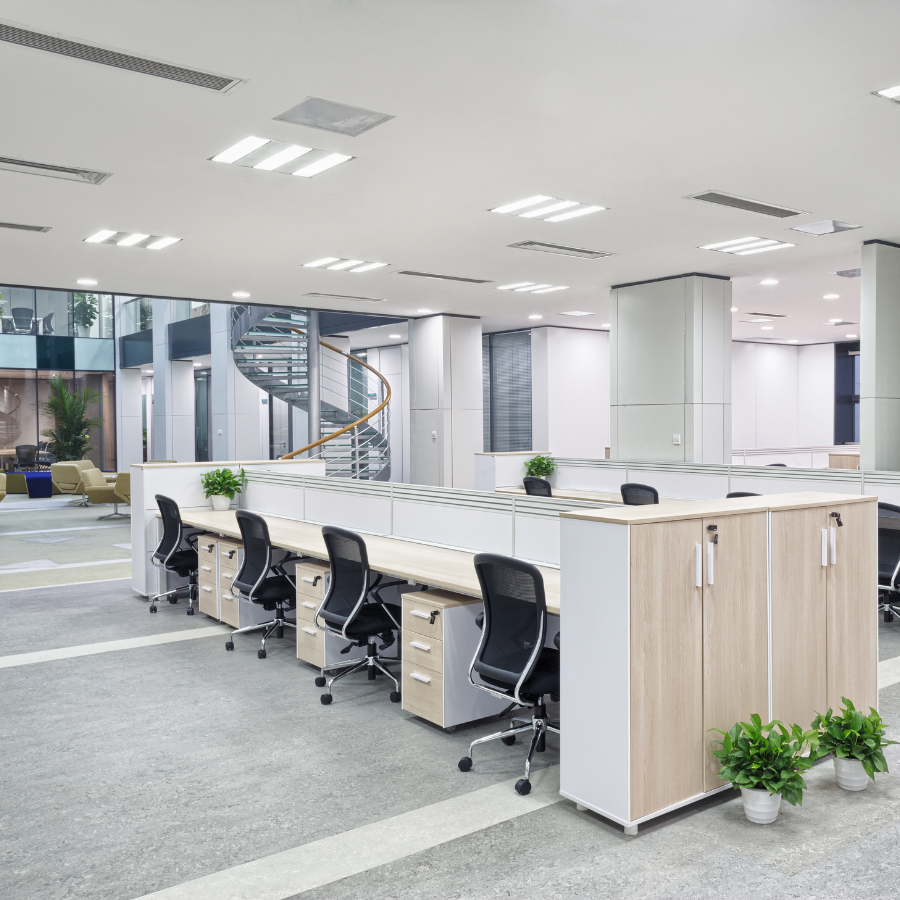
Modern Interior Ceiling Design for Offices (Source: Internet)
A beautiful ceiling system is not only about appearance but also about proper design and installation. Below are some common mistakes to avoid:
1. Choosing a Ceiling Design That Does Not Match the Room Height
Spaces with limited ceiling height should avoid overly complex multi-level ceiling designs. This can make the room feel lower, heavier, and more confined. For smaller spaces, flat ceilings or simple stepped ceilings are often the better choice.
2. Overusing Decorative Elements
Too many patterns, colors, or decorative details can make a space look cluttered. A well-designed ceiling should have a clear focal point rather than turning the entire ceiling into an overly complex decorative feature.
3. Failing to Plan Technical Systems in Advance
Lighting fixtures, air-conditioning systems, speakers, cameras, sprinklers, electrical wiring, and access panels should be planned before installation. Otherwise, modifications after completion may require cutting into the ceiling, affecting aesthetics and increasing costs.
4. Focusing Only on the Surface and Ignoring the Ceiling Frame
The ceiling surface is what people see, but the framing system determines long-term stability. Choosing a low-quality ceiling frame may result in a ceiling that looks good upon handover but deteriorates quickly over time.
5. Neglecting Long-Term Maintenance Requirements
For commercial buildings, maintenance accessibility is crucial. If the ceiling design makes it difficult to access technical systems above, future repairs to electrical, HVAC, or plumbing systems can become time-consuming and costly.
VIII. Frequently Asked Questions About Interior Ceiling Design
1. Which Is Better: Concealed Ceilings or Suspended Ceilings?
There is no universally better option—only the one that best suits the project’s needs.
- Concealed ceilings are ideal for spaces that prioritize seamless aesthetics, such as homes, hotels, and executive offices.
- Suspended ceilings are better suited for buildings requiring frequent maintenance access, such as offices, schools, hospitals, and shopping centers.
2. Are Multi-Level Ceilings Suitable for Small Spaces?
Yes, but they should be designed simply. For small rooms or spaces with low ceilings, light stepped designs with minimal layers and moderate lighting are recommended to avoid creating a heavy appearance.

Should You Choose a Concealed or Suspended Ceiling? (Source: Internet)
3. Can Decorative Suspended Ceilings Be Used in Homes?
Yes. Decorative suspended ceilings can be used in living rooms, dining areas, hallways, or common spaces. However, the ceiling tile design should match the interior style to avoid a traditional office-like appearance.
4. Should Indirect Lighting Be Used in Every Space?
Not necessarily. Indirect lighting is most suitable for spaces that aim to create atmosphere and emotion, such as living rooms, bedrooms, lobbies, restaurants, hotels, and showrooms. Workspaces, study areas, and technical rooms should still incorporate direct lighting to ensure adequate illumination.
5. How Can a Ceiling System Remain Durable and Require Less Maintenance?
Choose the right ceiling frame system, ceiling boards, and compatible accessories, and ensure proper installation. In addition, regular inspections should be conducted in areas exposed to high humidity or located near air-conditioning systems, pipes, or technical equipment.
IX. Conclusion
Modern interior ceiling design trends are no longer focused solely on aesthetics. They also emphasize user experience, ease of maintenance, and long-term durability.
From minimalist flat ceilings and decorative suspended ceilings to multi-level ceilings, indirect lighting solutions, and sustainable ceiling systems, each trend offers unique advantages and suits different types of projects.
The key is to select a ceiling solution based on actual project requirements: the intended use of the space, desired aesthetics, maintenance needs, and long-term investment considerations.
A high-quality ceiling system starts with a strong foundation. With its integrated ceiling framing solutions, ProMETAL helps contractors, architects, and project owners create durable, stable, and efficient gypsum ceiling systems that perform reliably throughout the building’s lifecycle.
ProMETAL – A Solid Foundation for Every Gypsum Ceiling System
A beautiful ceiling begins with a quality framing system. Backed by premium materials, clear manufacturing standards, and practical industry experience, ProMETAL provides durable gypsum ceiling framing solutions for a wide range of construction projects across Vietnam.
Contact ProMETAL today for consultation on ceiling and drywall partition solutions tailored to your project.
📞 Hotline: 0911 674 779
🌐 Website: prometal.com.vn
📩 Email: sales@prometal.com.vn