
 Tiếng Việt
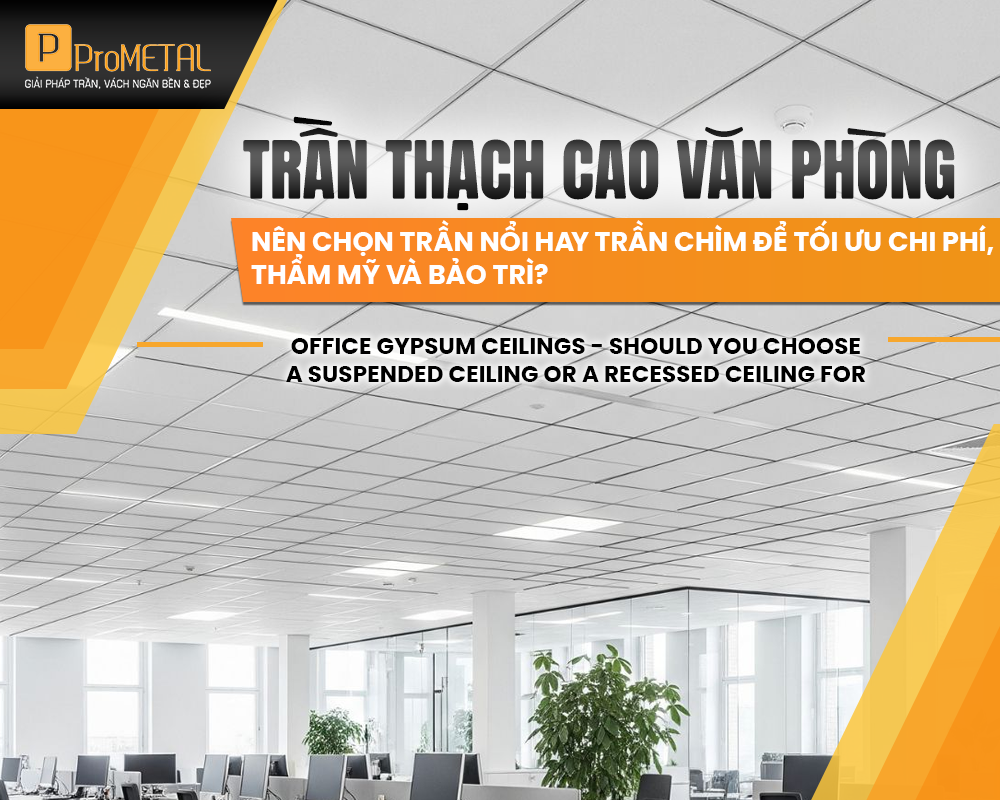
The ceiling is one of the key elements that directly affects the quality of a workplace environment. A properly designed office ceiling system not only conceals the building services above but also contributes to a professional image, enhances the working experience, and optimizes long-term operating costs.
In modern office buildings, gypsum ceilings are widely used thanks to their installation flexibility and their ability to integrate seamlessly with lighting systems, air-conditioning, fire protection systems, cameras, speakers, and other technical equipment.
However, not every office area should use the same ceiling solution. In open-plan workspaces, suspended ceilings are often the most practical option due to their fast installation and ease of maintenance. Meanwhile, reception areas, executive offices, and premium meeting rooms are generally better suited to concealed ceilings because of their higher aesthetic requirements.
So, should an office use a suspended ceiling or a concealed ceiling? How can both systems be combined to achieve an attractive appearance, cost efficiency, and ease of operation? This article will help project owners, architects, and contractors choose the most suitable office gypsum ceiling solution for different functional areas.
I. Why Are Gypsum Ceilings Suitable for Modern Offices?
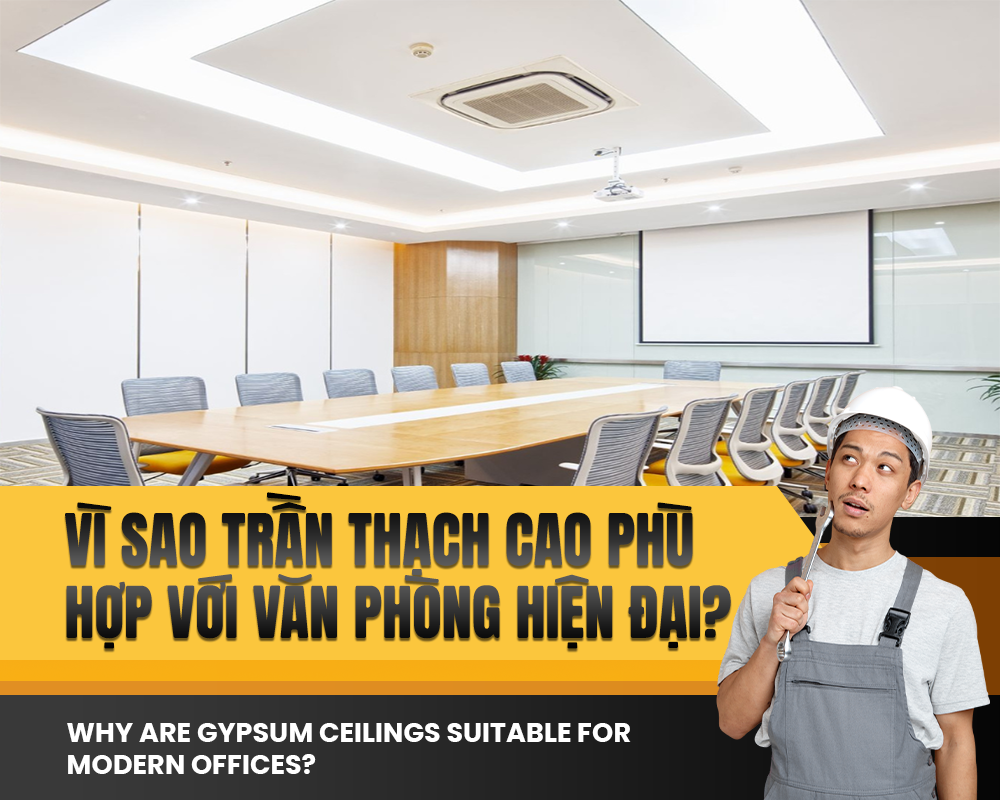
Today, offices are no longer just places where desks and computers are located. They have become spaces that reflect corporate culture, brand identity, and the overall quality of the working environment.
According to recent workplace design trends, offices are increasingly viewed as destinations that provide a better experience – supporting focused work, collaboration, client meetings, and employee wellbeing.
In this context, an office ceiling system must satisfy multiple requirements simultaneously:
- Conceal building services above the ceiling.
- Create a clean, professional finished surface.
- Support appropriate lighting layouts for different functional areas.
- Allow easy access for maintenance of electrical systems, HVAC equipment, cameras, speakers, and sprinkler systems.
- Enable fast installation with minimal impact on office fit-out schedules.
- Maintain durability and aesthetic quality over long-term use.
Gypsum ceilings effectively meet these requirements because they offer multiple implementation options, ranging from maintenance-friendly suspended ceilings to highly aesthetic concealed ceilings.
II. Key requirements for gypsum ceilings in office spaces

Office ceilings differ significantly from residential ceilings. Selecting the wrong ceiling solution can create difficulties for future maintenance, repairs, and renovation work.
1. Integration of High-Density Building Services
The ceiling plenum in office buildings typically accommodates a wide range of technical systems, including:
- Recessed LED lighting.
- Air-conditioning ductwork.
- Supply and return air diffusers.
- Fire sprinkler systems.
- Smoke detectors.
- Public announcement speakers.
- Security cameras.
- Electrical wiring, network cables, and signal cables.
- Maintenance access panels.
Therefore, the ceiling system must provide sufficient technical space for these services while maintaining a neat and aesthetically pleasing finished surface below.
2. Easy Maintenance with Minimal Operational Disruption
Offices typically operate continuously during business hours. When electrical systems need repair, air-conditioning units require cleaning, sprinkler systems need inspection, or equipment must be replaced, ceiling removal should be minimized whenever possible.
This is one of the primary reasons suspended ceilings are widely used in open workspaces, corridors, technical rooms, and areas that require frequent maintenance. Individual ceiling panels can be removed independently, allowing maintenance teams to quickly access the ceiling void without dismantling the entire ceiling system.
3. Maintaining a Professional Appearance
Office ceilings should create a clean, bright, and cohesive environment. Ceiling surfaces should not exhibit cracks, sagging, discoloration, or exposed technical systems.
Depending on the function of each area, aesthetic requirements may vary:
- Workspaces should appear clean, bright, and easy to maintain.
- Reception areas should create a strong and professional first impression.
- Meeting rooms should look polished and support effective lighting design.
- Executive offices should convey sophistication and privacy.
- Corridors should be durable, easy to clean, and provide convenient access to building services.
4. Considering Lifecycle Costs
The cost of an office ceiling extends far beyond the initial installation budget. Project owners should also consider:
- Operating costs.
- Maintenance costs.
- Panel replacement costs.
- Technical repair costs.
- Renovation costs when office layouts change.
A ceiling system with a low upfront cost but poor maintainability may ultimately result in significantly higher total ownership costs. Conversely, selecting the right ceiling system from the beginning can help ensure stable operation for many years.
III. What Is a Suspended Ceiling For an Office? When Should It Be Used?
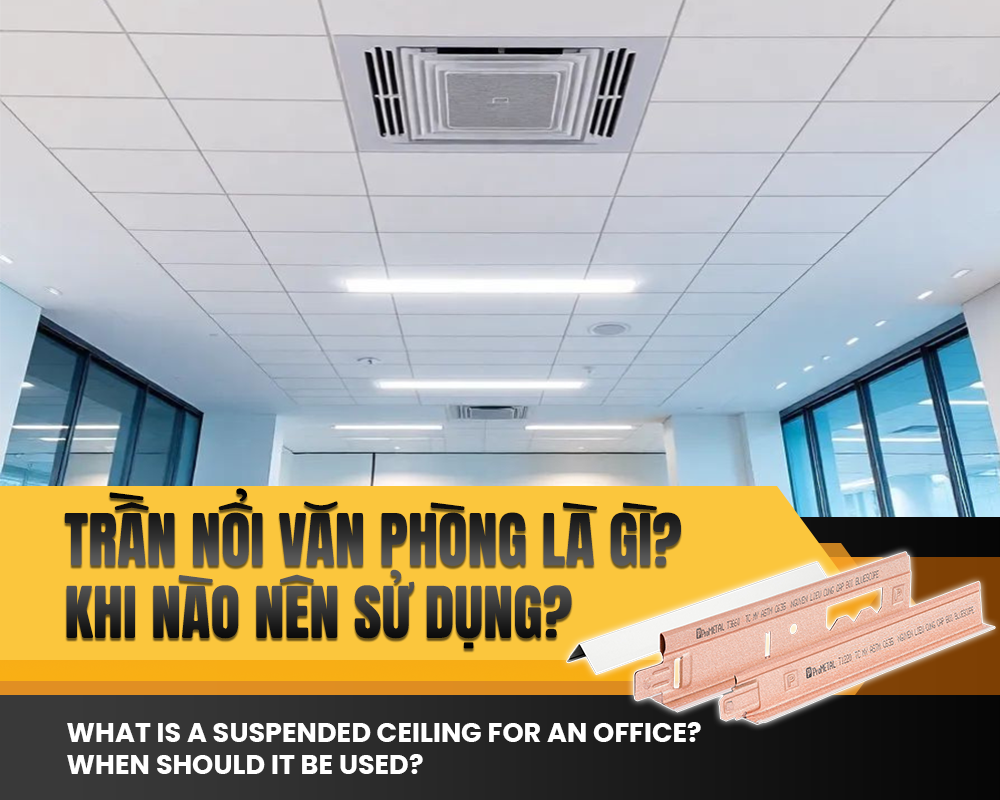
A suspended ceiling, also known as an exposed grid ceiling, uses a visible framing system with ceiling panels placed directly onto the grid structure.
When maintenance is required, individual panels can be removed to access the technical space above the ceiling.
This solution is highly popular in office environments because it offers fast installation, cost efficiency, and easy maintenance.
1. Advantages of Suspended Office Ceilings
Suspended ceilings provide several clear advantages in office environments:
- Fast installation across large areas.
- No joint treatment or painting required, unlike concealed ceilings.
- Easy removal and reinstallation of individual panels for technical inspections.
- Quick replacement of damaged panels without affecting the entire ceiling system.
- Suitable for projects focused on cost optimization.
- Convenient for renovations, office layout changes, and technical system upgrades.
For offices with a high density of building services, suspended ceilings allow facility management teams to access electrical systems, HVAC equipment, cameras, speakers, and communication cabling without causing major disruption to daily operations.
2. Limitations of Suspended Ceilings
Because the framing system remains visible, suspended ceilings generally do not offer the same seamless appearance as concealed ceilings. If inappropriate ceiling panels or framing systems are selected, the space may resemble an outdated office environment or lack visual impact.
To overcome this limitation, project teams can choose higher-quality ceiling grids, premium ceiling panels, or decorative ceiling panels in areas where stronger visual appeal is desired
3. Areas Where Suspended Ceilings Are Recommended
Suspended ceilings are particularly suitable for:
- Open-plan workspaces.
- Office corridors.
- Human resources departments.
- Accounting and administrative offices.
- Technical rooms and storage areas.
- Rental office spaces requiring flexible layouts.
- Educational facilities, hospitals, training centers, and coworking spaces.
IV. What Is a Concealed Office Ceiling? When Should It Be Used?
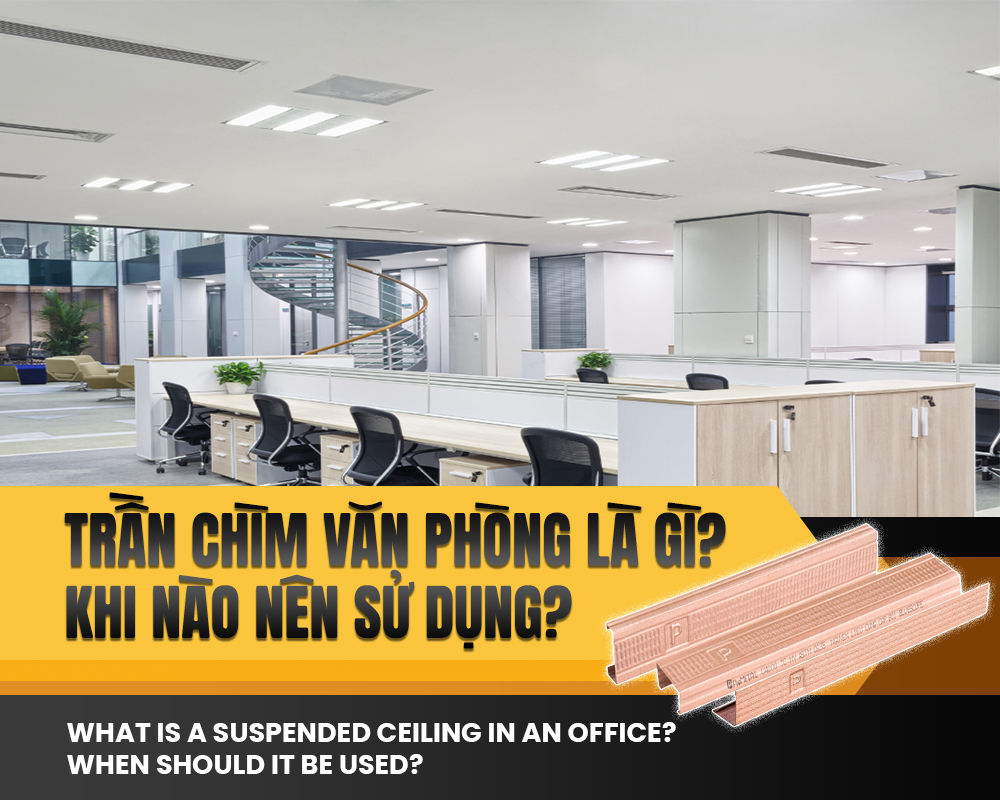
A concealed ceiling is a ceiling system in which the framing structure is hidden behind gypsum boards. The finished surface below appears as a seamless plane and can be painted, designed with stepped levels, integrated light coves, or customized decorative features according to the design concept.
This solution is ideal for office areas that require a high level of aesthetics and a professional image.
1. Advantages of Concealed Office Ceilings
Concealed ceilings create a more refined and premium appearance thanks to their smooth, uninterrupted surface without visible framing components. They are particularly suitable for spaces that represent the company’s image and brand identity.
Key advantages include:
- Smooth, seamless, and elegant ceiling surfaces.
- Easy integration with recessed lighting, indirect LED lighting, and linear lighting systems.
- Suitable for creating stepped ceilings and architectural focal points.
- Ideal for reception areas, meeting rooms, and executive offices.
- Creates a more professional and sophisticated atmosphere.
2. Limitations of Concealed Ceilings
Unlike suspended ceilings, concealed ceilings do not provide direct access to the ceiling plenum.
When maintenance of systems above the ceiling is required, access panels must be installed or a portion of the ceiling must be opened.
For this reason, projects that use concealed ceilings should carefully plan the locations of maintenance access panels during the design stage, particularly near:
- Air-conditioning control valves.
- Electrical distribution boxes.
- Fire protection equipment.
- Pipework and service lines.
- Critical technical equipment.
3. Areas Where Concealed Ceilings Are Recommended
Concealed ceilings are particularly suitable for:
- Reception areas.
- Executive offices.
- Premium meeting rooms.
- Client reception areas.
- Office showrooms.
- Spaces requiring strong brand representation.
- Areas featuring indirect lighting or stepped ceiling designs.
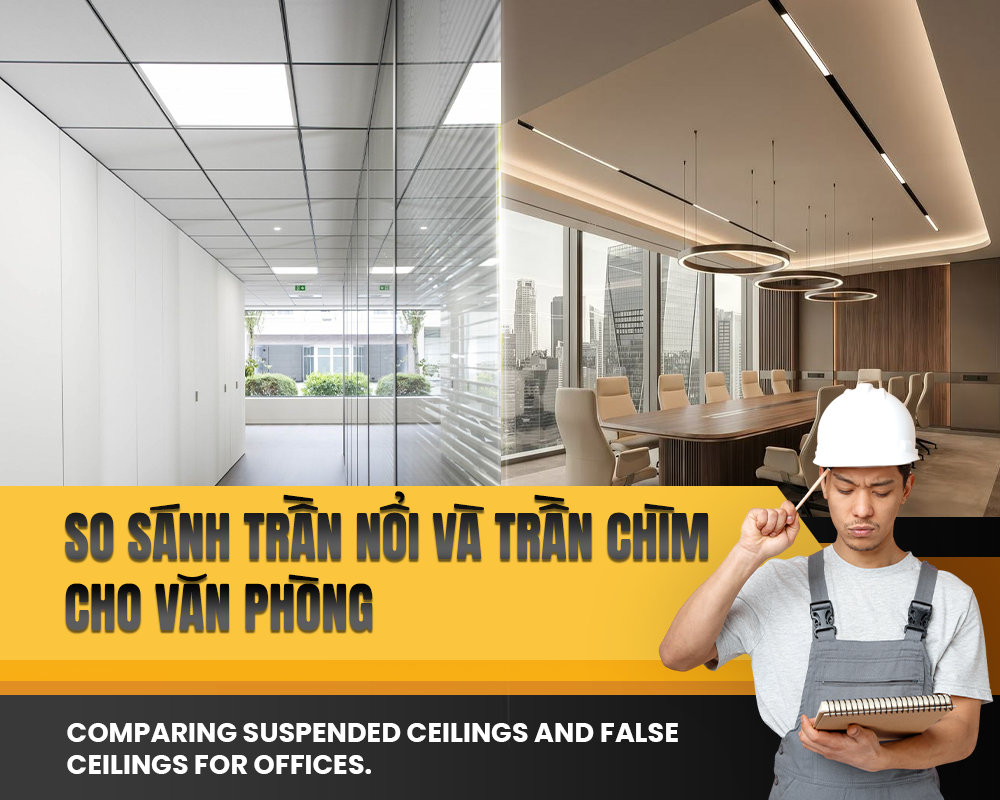
V. Comparing Suspended Ceilings and False Ceiling for Offices
| Criteria | Suspended Office Ceiling | Concealed Office Ceiling |
| Aesthetics | Neat and practical, visible grid system | Smooth, seamless, and more premium appearance |
| Installation Speed | Fast | Slower due to finishing work |
| Technical Maintenance | Very easy, individual panels can be removed | Requires access panels or partial ceiling opening |
| Initial Cost | Generally more cost-effective | Typically higher due to joint treatment and painting |
| Replacement Capability | Easy replacement of individual panels | Repairs are more complex |
| Best Suited For | Workspaces, corridors, technical areas | Reception areas, meeting rooms, executive offices |
| Flexibility for Renovation | High | Moderate |
| Brand Image Impact | Moderate | Stronger visual impact in client-facing areas |
For most offices, the most effective solution is not to choose either suspended ceilings or concealed ceilings exclusively, but rather to combine both systems according to the functional requirements of each area.
VI. Suggestions for Choosing Gypsum Ceiling for Different Office Areas

1. Open-Plan Workspaces
Open workspaces typically occupy large floor areas and contain a high density of lighting fixtures and HVAC equipment. They also require periodic technical maintenance.
For these reasons, suspended ceilings are usually the more practical choice.
Suspended ceilings offer:
- Fast installation.
- Easy panel replacement.
- Convenient access to building services above the ceiling.
- Better cost efficiency for large office spaces.
Recommendation: Use the ProMETAL suspended ceiling framing system combined with suitable ceiling panels to ensure structural stability, system compatibility, and convenient maintenance access.
2. Meeting Rooms
Meeting rooms generally require higher standards for aesthetics, lighting quality, and user focus.
Depending on the office category and design goals, either premium suspended ceilings or concealed ceilings may be appropriate.
For standard meeting rooms, suspended ceilings offer easier maintenance for:
- Speakers.
- Cameras.
- Projectors.
- Air-conditioning systems.
For executive boardrooms, large conference rooms, and client-facing meeting spaces, concealed ceilings create a more professional and prestigious environment.
Recommendation: Use ProMETAL concealed ceiling systems for important meeting rooms and incorporate maintenance access panels where future servicing may be required.
3. Executive Offices and Leadership Areas
These spaces play an important role in representing corporate identity, professionalism, and privacy.
Concealed ceilings are generally the preferred solution due to their clean appearance and compatibility with sophisticated lighting designs.
Design options may include:
- Minimalist flat ceilings.
- Light stepped ceiling designs.
- Recessed lighting.
- Indirect lighting systems.
These features help create an elegant and comfortable executive environment without appearing overly elaborate.
Recommendation: Use the ProMETAL concealed ceiling framing system to provide a stable foundation for premium ceiling finishes.
4. Reception Areas and Client-Facing Spaces
The reception area is often the first point of contact for clients, business partners, and job candidates.
As a result, it is one of the most important spaces for creating a positive first impression.
Reception ceilings often benefit from greater investment in design through:
- Concealed ceiling systems.
- Subtle stepped ceiling features.
- Decorative ceiling panels.
- Accent lighting.
These elements can significantly enhance the professionalism and credibility of the office environment.
Recommendation: Combine ProMETAL concealed ceiling systems with recessed lighting, indirect lighting, or ProMETAL decorative ceiling panels to strengthen brand identity and visual impact.
5. Corridors and Support Areas
Office corridors frequently accommodate:
- Electrical cabling.
- Security cameras.
- Sensors.
- Speakers.
- Various technical services.
Because these systems often require maintenance access, suspended ceilings are typically the most practical solution.
Similarly, support areas such as:
- Storage rooms.
- Pantries.
- Printing rooms.
- Secondary server rooms.
- Technical service rooms.
should prioritize ease of maintenance and cost efficiency over decorative features.
Recommendation: Use the ProMETAL suspended ceiling system to ensure rapid installation and simplified facility management throughout the building’s operational life.
VII. ProMETAL Framing Suitable for Offices
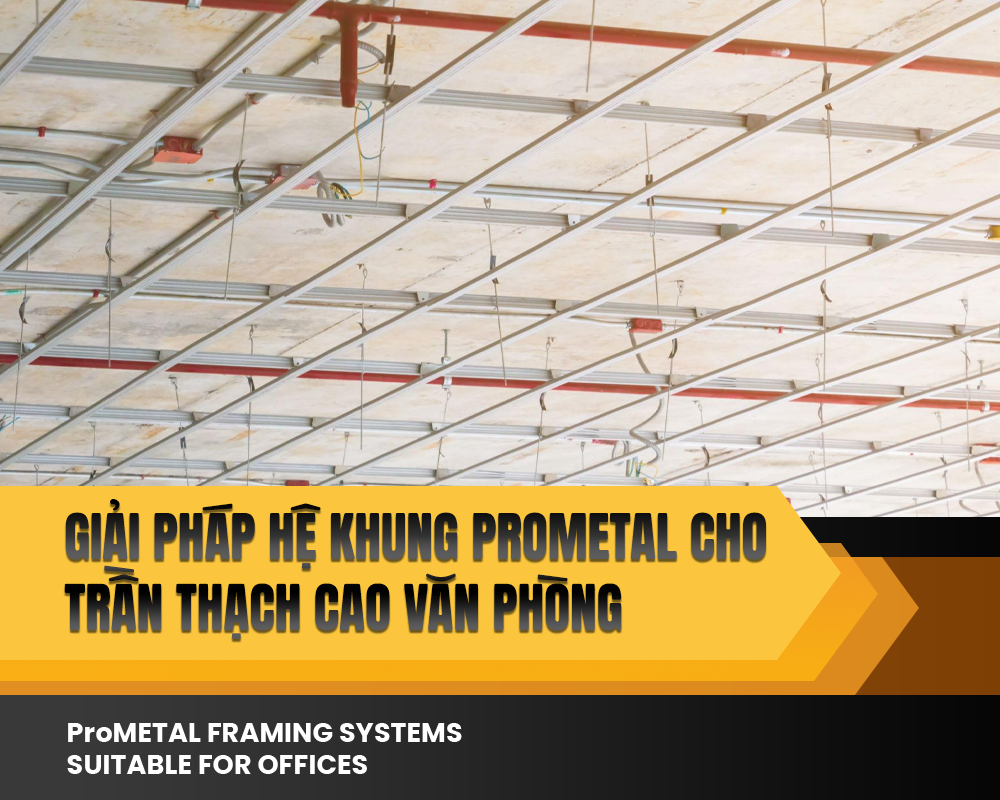
A durable and stable office ceiling system depends not only on the ceiling panels but also, to a large extent, on the framing system behind them. The framing system provides structural support, maintains ceiling flatness, and determines the long-term performance of the entire ceiling system.
ProMETAL offers ceiling framing solutions designed to meet the needs of different office areas.
1. ProMETAL Suspended Ceiling Framing System
The ProMETAL suspended ceiling framing system is ideal for areas that require fast installation, easy maintenance, and convenient panel replacement.
Key Benefits
- Suitable for offices, schools, hospitals, and commercial buildings.
- Allows individual ceiling panels to be removed for access to building services.
- Helps reduce installation time across large floor areas.
- Makes panel replacement easy during renovations or repairs.
- Supports lower long-term operating and maintenance costs.
Suspended ceiling systems are a practical choice for open-plan workspaces, corridors, and areas requiring frequent maintenance access.
2. ProMETAL Concealed Ceiling Framing System
The ProMETAL concealed ceiling framing system is designed for office areas that demand a higher level of aesthetics, such as reception areas, meeting rooms, executive offices, and showrooms.
Key Benefits
- Supports smooth and seamless ceiling finishes.
- Compatible with recessed lighting, light coves, and stepped ceiling designs.
- Long main channels help reduce the number of joints.
- Integrated framing components help minimize installation inconsistencies.
- Suitable for projects requiring clear technical inspection and quality control procedures.
When combined with proper installation practices, the right framing system helps improve ceiling stability and reduce common issues such as ceiling sagging, joint cracking, and uneven surfaces.
VIII. Office Gypsum Ceiling Costs: Consider Total
When selecting a ceiling system for an office, many project owners focus only on the initial material cost. However, this approach does not provide a complete picture.
An office ceiling system should be evaluated based on its total cost of ownership, including:
- Material costs.
- Installation labor costs.
- Surface finishing costs.
- Maintenance costs.
- Panel replacement and repair costs.
- Operational downtime caused by maintenance or system failures.
- Renovation costs when office layouts are modified.
1. Suspended Ceilings: Ideal for Large Areas and Frequent Maintenance
Suspended ceilings offer significant advantages in installation speed and maintenance accessibility.
Since they do not require joint treatment, skim coating, or painting like concealed ceilings, the installation process is generally faster and simpler.
When a ceiling panel is damaged or technical access is required, individual panels can be removed and replaced independently. This reduces repair time and minimizes disruption to office operations.
2. Concealed Ceilings: An Investment in Premium Corporate Image
Concealed ceilings generally involve higher finishing costs due to additional processes such as joint treatment, skim coating, and painting.
However, in representative areas such as reception spaces, executive meeting rooms, and leadership offices, this investment is often justified because it enhances the company’s professional image and brand perception.
3. The Most Effective Solution: Combining Suspended and Concealed Ceilings
For most office environments, the optimal approach is to combine both ceiling systems:
- Suspended ceilings for open-plan workspaces, corridors, and support areas.
- Concealed ceilings for reception areas, important meeting rooms, and executive offices.
- Decorative ceiling panels or accent lighting in areas where brand identity needs to be emphasized.
This combination provides the best balance between cost efficiency, aesthetics, and maintenance accessibility.
IX. Mistakes to Avoid When Designing Gypsum Ceilings For
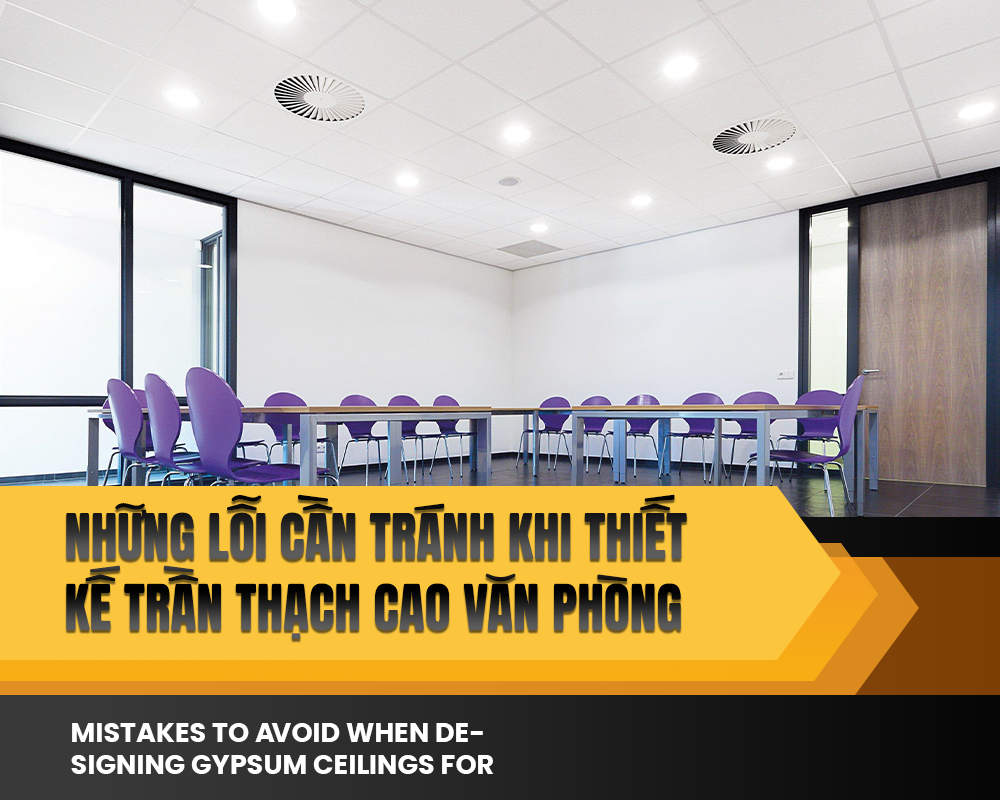
1. Using a Single Ceiling Type Throughout the Entire Office
Different office areas have different functional requirements.
Using concealed ceilings throughout the entire office can increase both installation and maintenance costs. On the other hand, using suspended ceilings everywhere may reduce the visual impact of important client-facing spaces.
A better approach is to divide the office into functional zones and select the most appropriate ceiling solution for each.
2. Failing to Include Access Panels in Concealed Ceilings
This is one of the most common mistakes in office ceiling design.
Without access panels, maintenance personnel may struggle to inspect:
- HVAC components.
- Electrical distribution boxes.
- Technical valves.
- Fire protection equipment.
If concealed ceilings are used, access panel locations should be planned during the design stage.
3. Not Coordinating Lighting, HVAC, and Sprinkler Layouts Early
Technical systems should be coordinated from the beginning between architectural, interior design, MEP, and ceiling installation teams.
If these elements are addressed later in the project, ceiling modifications may be required, resulting in:
- Reduced aesthetics.
- Additional labor.
- Increased project costs.
4. Using Non-Compatible Framing Systems and Accessories
Combining framing components, ceiling panels, and accessories from multiple suppliers may lead to installation inconsistencies, increased installation time, and a higher risk of future failures.
Using a fully integrated framing system allows installers to work more efficiently, improves quality control, and reduces on-site complications.
5. Focusing Only on Initial Costs While Ignoring Maintenance Costs
For offices expected to operate for many years, maintenance costs are a critical consideration.
A ceiling system designed for easy maintenance can:
- Reduce repair time.
- Minimize operational disruption.
- Lower long-term ownership costs.
X. Frequently Asked Questions
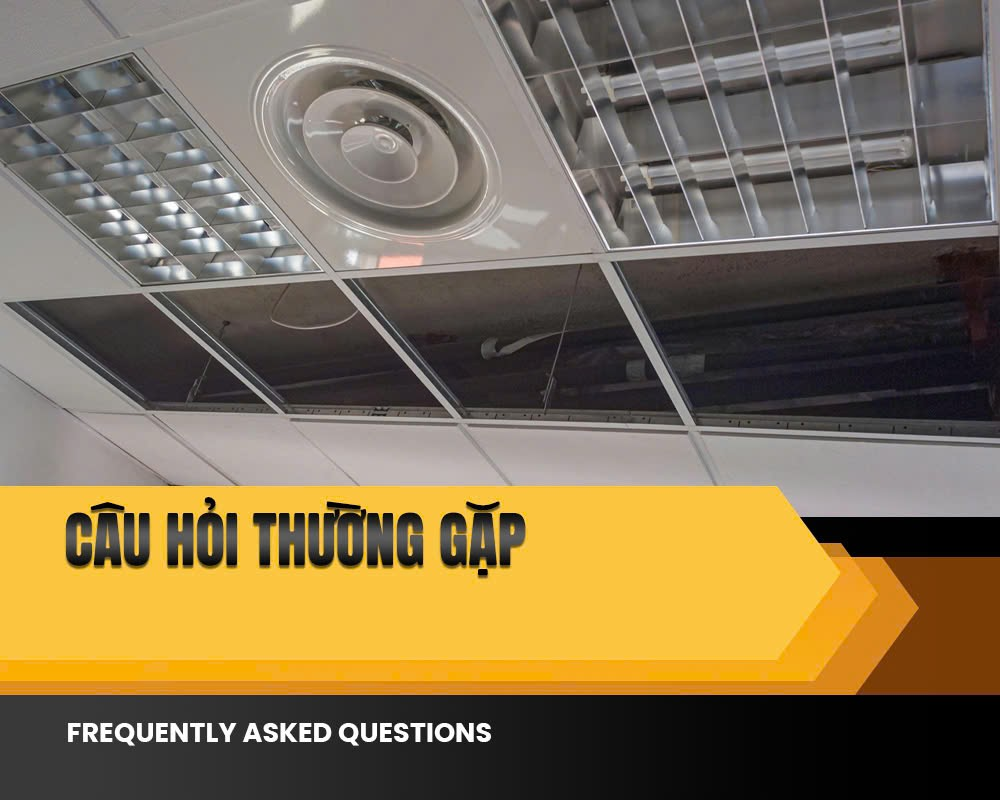
1. Should a Small Office Under 100 m² Use a Gypsum Ceiling?
Yes. Gypsum ceilings help conceal electrical wiring, air-conditioning systems, and technical services while creating a cleaner and more professional appearance.
For smaller offices, suspended ceilings can help optimize costs, while concealed ceilings may be selected when enhanced aesthetics are desired.
2. Are Suspended Office Ceilings Durable? Will the Panels Sag Over Time?
Suspended ceilings can provide excellent durability when installed using suitable framing systems, ceiling panels, and accessories, and when proper installation practices are followed.
The long-term stability of the ceiling depends on:
- Material quality.
- Environmental conditions.
- Installation workmanship.
3. Can Cassette Air Conditioners Be Installed in Suspended Ceilings?
Yes. Cassette air-conditioning units are installed within the ceiling plenum, while the diffuser or visible unit face is integrated within the ceiling grid layout.
To achieve the best results, HVAC locations should be coordinated before ceiling installation begins.
4. Should Offices Use Suspended Ceilings or Concealed Ceilings?
Open workspaces, corridors, and technical areas should generally prioritize suspended ceilings because they provide easier maintenance access.
Reception areas, executive meeting rooms, and executive offices benefit more from concealed ceilings due to their superior aesthetics.
For most projects, the best solution is to combine both systems according to the functional requirements of each area.
5. Are Concealed Ceilings Difficult to Maintain?
Concealed ceilings provide less direct access to the ceiling plenum than suspended ceilings.
However, when access panels are properly incorporated during the design stage, maintenance can still be performed efficiently without extensive ceiling removal.
6. Does ProMETAL Provide Consultation for Office Ceiling Solutions?
Yes. ProMETAL offers technical consultation to help clients select the most suitable ceiling framing system based on:
- Office size.
- Functional requirements.
- Aesthetic expectations.
- Project budget.
- Technical and environmental conditions.
XI. Conclusion

Office gypsum ceilings are a flexible solution suitable for a wide range of modern workplace environments. However, to achieve the best results, project owners and contractors should avoid using a single ceiling type throughout the entire office and instead select ceiling systems based on the functional requirements of each area.
For open-plan workspaces, corridors, and areas requiring frequent maintenance, suspended ceilings are often the most practical solution thanks to their fast installation and easy technical access.
For reception areas, executive meeting rooms, leadership offices, and client-facing spaces, concealed ceilings help enhance aesthetics and reinforce a professional corporate image.
An effective office ceiling system starts with a stable, integrated framing solution that matches the intended application. With ProMETAL’s suspended and concealed ceiling systems, contractors, architects, and project owners can optimize three key factors simultaneously: aesthetics, cost efficiency, and long-term maintainability.
ProMETAL – Integrated ceiling framing solutions for modern office spaces that are durable, attractive, and easy to maintain.
Contact ProMETAL today for professional consultation on the most suitable gypsum ceiling solution for your office project.
Hotline: 0911 674 779
Website: ProMETAL.com.vn
Email: sales@ProMETAL.com.vn