
 Tiếng Việt
Over time, many buildings experience issues such as yellow stains, swelling, or mold growth on gypsum board ceilings and partitions, especially in bathrooms and kitchens. In most cases, the problem is not caused by poor installation but by selecting materials that are not suitable for the environment.
For these applications, moisture-resistant gypsum board is the recommended solution. But what makes it different from standard gypsum board? Where should it be used, and how do you choose the right type for your project? Let’s explore these questions in the article below.
I. What Is Moisture-Resistant Gypsum Board?
Moisture-resistant gypsum board is specifically designed for areas with high humidity, such as bathrooms, kitchens, laundry rooms, and basements. Compared with standard gypsum board, it features a specially treated gypsum core and moisture-resistant face paper to reduce moisture absorption from the surrounding environment.
The easiest way to identify a moisture-resistant gypsum board is by its green or olive-green surface, although the exact shade may vary by manufacturer. Thanks to its enhanced resistance to moisture absorption, this type of board helps minimize swelling, yellow staining, and mold growth while extending the lifespan of gypsum ceilings and partition systems in humid environments.
However, it is important to note that moisture-resistant gypsum board is not waterproof. It is designed to withstand high humidity in the air but is not intended for areas with continuous direct water exposure or prolonged immersion.
| Criteria | Standard Gypsum Board | Moisture-Resistant Gypsum Board |
| Identification Color | Usually white or off-white | Usually green or olive green |
| Gypsum Core | Standard gypsum core | Gypsum core treated with moisture-resistant additives |
| Face Paper | Standard paper facing | Moisture-resistant paper facing |
| Moisture Absorption | Absorbs moisture from the air more readily | Reduces moisture absorption from the surrounding environment |
| Performance in High-Humidity Conditions | More likely to swell or deform after prolonged exposure to humidity | Better dimensional stability in humid environments |
| Risk of Mold Growth | Higher in damp conditions | Lower risk of mold development |
| Recommended Applications | Living rooms, bedrooms, offices, and other dry interior spaces | Bathrooms, kitchens, laundry rooms, basements, and other high-humidity areas |
| Resistance to Direct Water Exposure | No | No (moisture-resistant only, not waterproof) |
II. Common Misconceptions About Moisture-Resistant Gypsum Board
1. Moisture-Resistant Does Not Mean Waterproof
This is the most common misconception. Moisture-resistant gypsum board is designed to perform well in environments with high humidity, such as bathrooms with steam from showers or kitchens where cooking generates moisture. However, if water comes into direct contact with the board or continuously leaks onto it (for example, from a leaking pipe), the board can still become damaged.
For this reason, it is important to use moisture-resistant gypsum board in the appropriate locations while ensuring that the building’s waterproofing system functions properly. A well-designed waterproofing system will significantly extend the service life of the gypsum board.
2. Replacing Only the Board While Ignoring the Framing System
When mold or moisture damage appears on ceilings or partitions, many people focus solely on replacing the damaged board without inspecting the framing system behind it. This approach addresses only the visible surface issue and may not solve the root cause.
If the framing system has already been affected by prolonged exposure to moisture-such as corrosion, deformation, or structural weakening-replacing the board alone may provide only a temporary solution. The same problems can reappear over time.
When repairing ceilings or partitions in humid areas, it is important to inspect the following components simultaneously:
- The condition of the gypsum board.
- The source of moisture or water intrusion.
- The framing system behind the board.
- Fasteners and connection accessories.
- The area’s ventilation performance.
- Waterproofing layers and surface finishing systems.
III. Where Should Moisture-Resistant Gypsum Board Be Used?
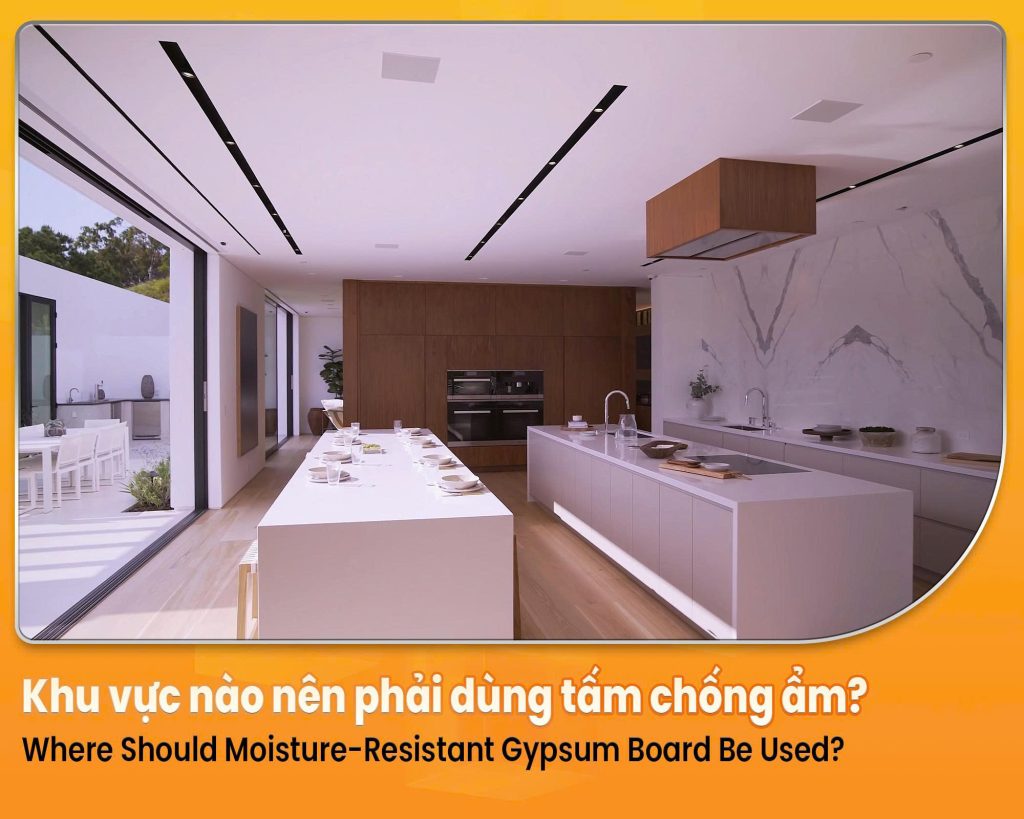
Not every area of a building requires the use of moisture-resistant gypsum boards. This type of board should be prioritized in spaces with high humidity levels or in areas that are regularly exposed to moisture and water vapor.
1. Bathrooms and Restrooms
Moisture-resistant gypsum board is a recommended solution for bathrooms and restrooms. Steam generated from showers and bathtubs creates consistently high humidity levels, which can cause standard gypsum boards to deteriorate quickly in these environments.
Additional note: Even when using moisture-resistant boards, wall surfaces that are directly exposed to water-such as shower areas and bathtub surrounds-should still be tiled or protected with a dedicated waterproofing system. Gypsum boards should not be exposed to direct and continuous water contact.
2. Kitchens and Areas Near Sources of Steam
Ceiling materials in kitchens require special consideration, particularly in areas above cooking stations where steam is generated continuously during food preparation. Installing moisture-resistant gypsum boards on kitchen ceilings and partitions can help prevent common issues such as yellow stains, swelling, and surface deterioration over time.
For layouts where bathrooms and kitchens are adjacent, moisture-resistant boards can be used throughout the entire area without the need to differentiate between individual rooms.
3. Basements and Ground-Contact Areas
Many basements are more susceptible to high humidity levels due to limited ventilation and moisture from the surrounding soil. When constructing gypsum board ceilings or partitions in basements, moisture-resistant boards are generally a more suitable choice than standard gypsum boards.
4. Other High-Humidity Areas
In addition to bathrooms, kitchens, and basements, moisture-resistant gypsum boards are also suitable for coastal properties, resorts, hotels, warehouses, and other environments where high humidity is common.
In these conditions, using moisture-resistant boards helps reduce the risk of swelling, mold growth, and surface damage while improving the long-term durability and performance of gypsum ceiling and partition systems compared to standard gypsum boards.
IV. Practical Consequences of Using the Wrong Type of Gypsum Board
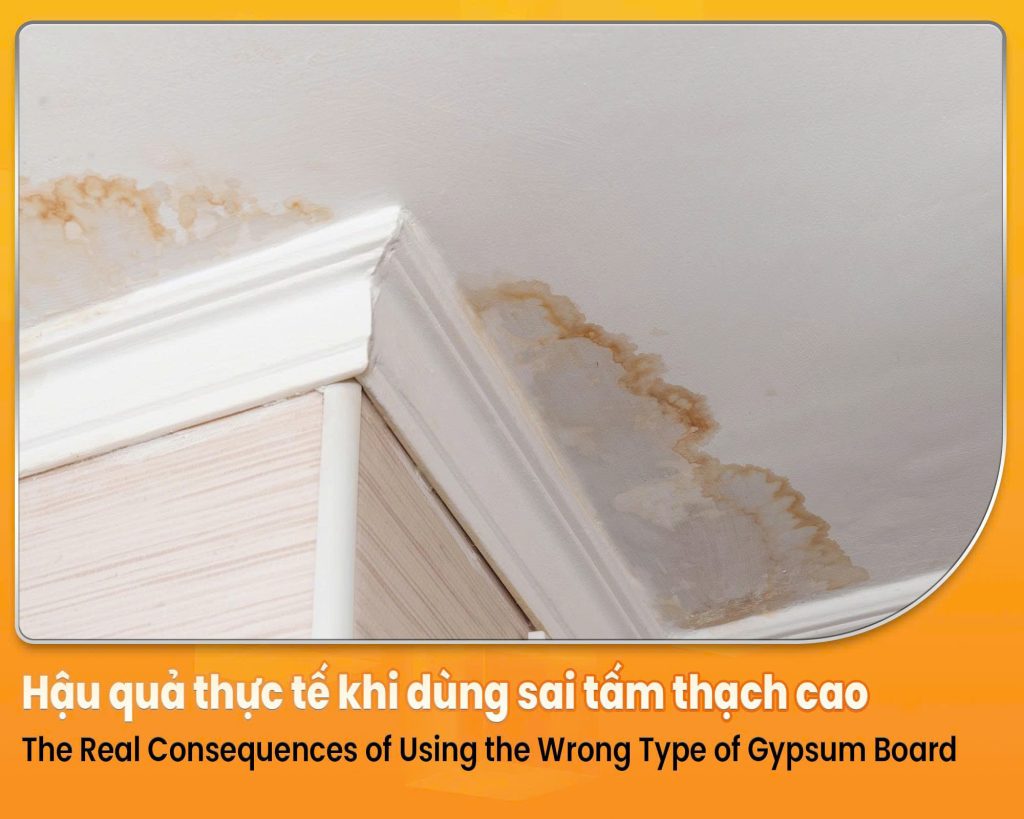
Using standard gypsum boards in high-humidity areas may not cause immediate problems at the time of project completion. However, after a period of use, signs of deterioration and moisture-related damage can gradually begin to appear.
Surface Bubbling and Delamination
When gypsum boards are exposed to moisture over an extended period, the paper facing can begin to separate from the gypsum core, resulting in bubbling or blistering across sections of the surface. This issue is commonly found on ceilings in bathrooms, kitchens, and other areas where moisture and steam tend to accumulate.
Yellow Stains and Discoloration
Humidity combined with dust, water vapor, or minor leaks can cause yellow stains, brown streaks, or uneven discoloration on ceilings and partitions. These visible defects can significantly affect the overall appearance and perceived quality of a building.
Mold Growth
Moist environments provide ideal conditions for mold development. Mold typically appears as black, green, or gray spots on the board surface, especially in concealed corners, poorly ventilated areas, or locations close to sources of moisture.
In addition to impacting aesthetics, mold can reduce indoor air quality and create an uncomfortable environment for occupants.
Increased Repair and Maintenance Costs
Although moisture-resistant gypsum boards generally cost more than standard boards, the additional upfront investment is often far lower than the cost of repairing moisture-related damage caused by using unsuitable materials.
When gypsum boards fail, building owners may face expenses related to demolition, board replacement, joint treatment, repainting, site cleaning, and in some cases, replacement of the framing system if corrosion has already occurred.
For this reason, selecting the appropriate gypsum board from the beginning is often the most cost-effective solution in the long term.
V. How to Choose the Right Gypsum Board for Different Areas
To avoid unnecessary costs and reduce the risk of premature deterioration, gypsum boards should be selected based on the actual environmental conditions and functional requirements of each area.
| Area of Use | Recommended Board Type | Technical Considerations |
| Living rooms, bedrooms | Standard gypsum board | Suitable for dry indoor environments |
| General office spaces | Standard gypsum board or specialty boards as required | Consider additional requirements such as sound insulation or fire resistance |
| Bathrooms and restrooms | Moisture-resistant gypsum board | Proper waterproofing and ventilation are essential |
| Kitchens | Moisture-resistant gypsum board | Particularly recommended near cooking areas and sinks |
| Basements | Moisture-resistant gypsum board | Combine with adequate ventilation and moisture control measures |
| Laundry and drying areas | Moisture-resistant gypsum board | Avoid prolonged direct water exposure |
| Utility and technical rooms | Moisture-resistant or fire-resistant gypsum board, depending on requirements | Consider temperature, electrical systems, and fire safety conditions |
| Coastal buildings | Moisture-resistant gypsum board where appropriate | Use with corrosion-resistant framing systems |
The most effective approach is not to install moisture-resistant gypsum boards throughout the entire building, but rather to use them only where they are truly needed. This strategy helps optimize project costs while maintaining the long-term durability and performance of gypsum ceiling and partition systems.
VI. Combining Moisture-Resistant Gypsum Board with the ProMETAL Framing System
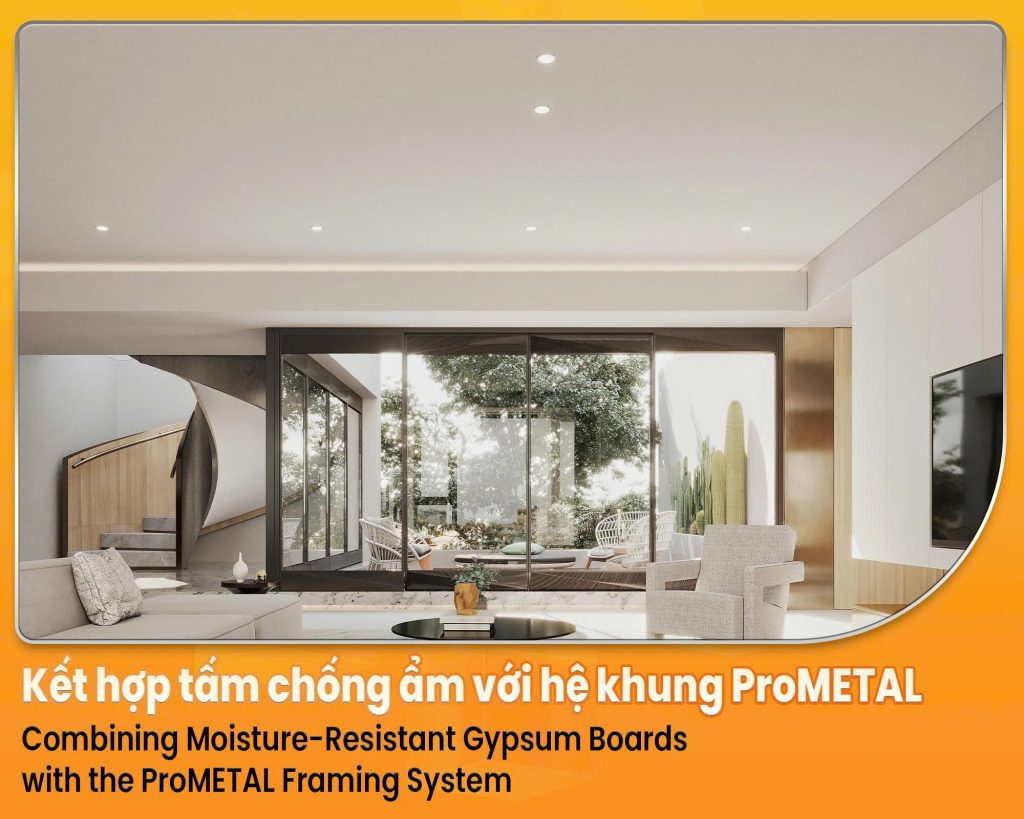
When discussing gypsum ceilings and partitions in humid environments, many people focus solely on the type of board being used and overlook the framing system behind it. In reality, the durability of the entire ceiling or partition system depends on both components: the finished board surface and the structural framing system that supports it.
Even if moisture-resistant gypsum boards are installed, using a low-quality framing system that is susceptible to corrosion or unsuitable for the operating environment can still lead to issues such as sagging, rusting, loose connections, and reduced service life.
Why Is the Framing System Important in Humid Areas?
The framing system supports the boards, maintains the alignment of ceilings and partitions, and carries loads throughout the life of the installation. In high-humidity environments, the framing system should provide enhanced corrosion resistance to minimize the risk of deterioration.
A suitable framing system helps to:
- Maintain a stable and even ceiling or partition surface.
- Reduce the risk of sagging, misalignment, and joint cracking.
- Improve the durability of the entire finishing system.
- Minimize the likelihood of costly repairs and replacement work in the future.
- Ensure compatibility between boards, framing components, and accessories.
Integrated Solutions from ProMETAL
ProMETAL provides ceiling and partition framing systems designed to meet the requirements of a wide range of building applications. When combined with gypsum board products such as standard boards, moisture-resistant boards, fire-resistant boards, and other specialty boards, contractors and project owners can implement a fully integrated solution tailored to each area of use.
For high-humidity environments such as bathrooms, kitchens, basements, and coastal buildings, selecting the right moisture-resistant board together with an appropriate framing system can improve structural stability, extend service life, and reduce future maintenance and repair costs.
VII. Technical Considerations for Installing Moisture-Resistant Gypsum Boards
To achieve the full benefits of moisture-resistant gypsum boards, proper installation practices and effective moisture control measures are essential.
Avoid Direct Water Exposure
Moisture-resistant gypsum boards are not designed to replace waterproof materials. Therefore, they should not be installed in areas exposed to direct water flow or prolonged water immersion.
Locations that experience direct water splashing should be protected using appropriate materials such as ceramic tiles, waterproofing membranes, or other specialized finishing systems.
Inspect Potential Sources of Water Leakage Before Installation
Before installing ceilings or partitions, all potential sources of moisture should be checked, including plumbing systems, upper-floor slabs, air-conditioning drainage lines, and any areas vulnerable to leaks.
If water intrusion issues are not resolved beforehand, even moisture-resistant boards may eventually suffer damage.
Ensure Adequate Ventilation
Bathrooms, kitchens, and basements should be equipped with suitable ventilation systems. If moisture remains trapped within enclosed spaces for extended periods, mold growth and surface deterioration may still occur despite the use of moisture-resistant materials.
Use Appropriate Accessories and Framing Systems
Moisture-resistant boards should be installed on framing systems that are suitable for the environmental conditions. Screws, connectors, and other accessories should also be selected carefully to minimize the risk of corrosion and connection failures over time.
Properly Treat Joints and Apply Suitable Finishes
Joints between boards should be finished in accordance with recommended installation procedures. In humid areas, it is advisable to use finishing paints and coatings with enhanced moisture resistance rather than standard interior paints to improve long-term performance.
VIII. Frequently Asked Questions
How Can You Tell the Difference Between Moisture-Resistant and Standard Gypsum Boards?
The quickest way is to check the surface color. Moisture-resistant gypsum boards are typically green or olive green, while standard gypsum boards are usually white or off-white. You can also verify the product type by checking the markings printed on the board, product labels, or packaging.
Are Moisture-Resistant Gypsum Boards More Expensive Than Standard Boards?
Yes. Moisture-resistant boards generally cost more because they are specially treated to reduce moisture absorption. However, the price difference is often significantly lower than the cost of repairing moisture-related damage caused by using the wrong board in humid areas.
Does a Small Bathroom Still Need Moisture-Resistant Gypsum Boards?
Yes. Regardless of its size, a bathroom generates moisture and water vapor during daily use. In poorly ventilated spaces, humidity can accumulate even more quickly. For this reason, moisture-resistant gypsum boards are recommended for bathroom ceilings and partitions.
Can Moisture-Resistant Gypsum Boards Be Used Outdoors?
No. Moisture-resistant gypsum boards are designed for indoor environments with elevated humidity levels, not for outdoor areas exposed directly to rain, sunlight, and weather conditions. Outdoor applications require specialized materials specifically designed for exterior use.
If Bathroom Walls Are Tiled, Is a Moisture-Resistant Ceiling Still Necessary?
Yes. Water vapor naturally rises and accumulates near the ceiling, making the ceiling particularly vulnerable to moisture exposure. Therefore, moisture-resistant gypsum boards are still recommended for bathroom ceilings even when the walls are fully tiled.
Do Moisture-Resistant Boards Completely Prevent Mold Growth?
Not entirely. Moisture-resistant gypsum boards help reduce the risk of mold growth because they absorb less moisture than standard boards. However, mold can still develop if there are water leaks, inadequate ventilation, or prolonged exposure to excessive humidity. For optimal performance, moisture-resistant boards should be combined with proper waterproofing and ventilation measures.
If a Ceiling Has Mold, Is Replacing the Board Enough?
Not necessarily. The underlying cause of the mold should first be identified. It is important to inspect the framing system, potential sources of water intrusion, and the effectiveness of the ventilation system. If the framing has already corroded or the moisture source remains unresolved, replacing the board alone may only provide a temporary solution.
Conclusion
Moisture-resistant gypsum boards are an ideal choice for high-humidity environments such as bathrooms, restrooms, kitchens, basements, laundry areas, and coastal buildings. Using the appropriate board helps reduce the risk of surface bubbling, discoloration, mold growth, and costly repairs over the life of the building.
However, it is important to understand that moisture-resistant does not mean waterproof. To achieve long-lasting performance, gypsum ceiling and partition systems should combine the appropriate board type, a suitable framing system, compatible accessories, effective waterproofing measures, and proper ventilation.
With Yoshino gypsum board solutions and ProMETAL framing systems, project owners and contractors can select integrated building materials tailored to the specific requirements of each area, improving aesthetics, durability, and long-term cost efficiency.
ProMETAL – Integrated Solutions for Durable and High-Quality Gypsum Ceiling and Partition Systems.
Contact ProMETAL for expert advice on selecting the right gypsum boards and framing systems for every area of your project.
📞 Hotline: +84 911 674 779
🌐 Website: ProMETAL.com.vn
📩 Email: sales@prometal.com.vn