
 Tiếng Việt

Many common ceiling issues such as sagging, cracked joints, or loose connections are not caused by the framing system or gypsum boards themselves, but by small accessories such as suspension rods, connection brackets, and snap-lock connectors.
Although these components account for only a small portion of the overall project cost, they play a critical role in ensuring the stability, durability, and safety of the entire ceiling system.
For this reason, selecting the right accessories and ensuring compatibility throughout the system should never be overlooked when installing a gypsum ceiling.
I. What Are Gypsum Ceiling Accessories?
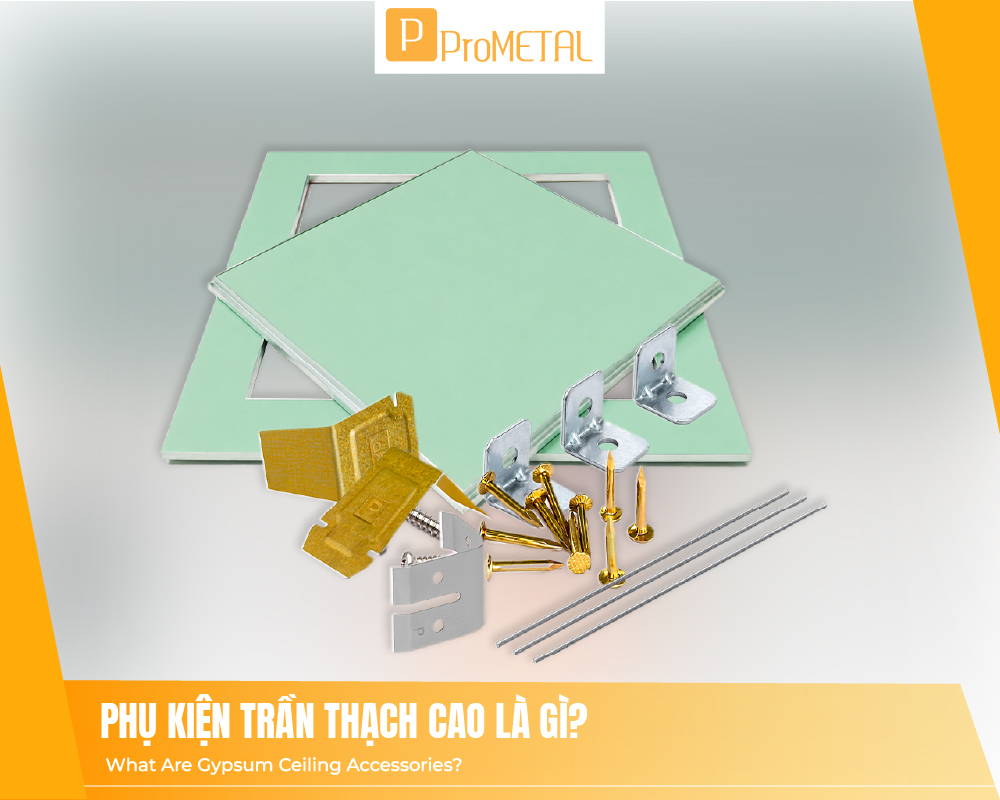
Gypsum ceiling accessories are the connecting and fastening components that integrate the various parts of a ceiling system into a complete structural assembly. While they are smaller and often receive less attention than framing members or gypsum boards, these accessories are essential for maintaining load-bearing performance, structural stability, and the long-term durability of the ceiling system.
A complete gypsum ceiling system typically includes accessories such as suspension rods, turnbuckles, connection brackets, snap-lock connectors, steel anchors, screws, and ceiling access panels. Each component serves a specific purpose, from suspending and securing the framing system to connecting framing members and facilitating future maintenance access.
Selecting accessories that are fully compatible with the framing system not only simplifies installation but also helps minimize issues such as ceiling sagging, loose connections, and structural deformation throughout the service life of the ceiling.
Gypsum ceiling accessories are the connecting and fastening components that join various parts of a ceiling system into a complete structural assembly. Although smaller in size and often receiving less attention than framing members or gypsum boards, these accessories play a vital role in ensuring the load-bearing capacity, structural stability, and service life of the entire ceiling system.
A complete gypsum ceiling system typically includes accessories such as suspension rods, turnbuckles, connection brackets, snap-lock connectors, steel anchors, screws, and ceiling access panels. Each component serves a specific purpose, from suspending and securing the framing system to connecting framing members and providing access for future inspection and maintenance.
Selecting accessories that are fully compatible with the framing system not only facilitates a smoother installation process but also helps minimize issues such as ceiling sagging, loose connections, and structural deformation during the system’s service life.
II. ProMETAL Gypsum Ceiling System Accessories
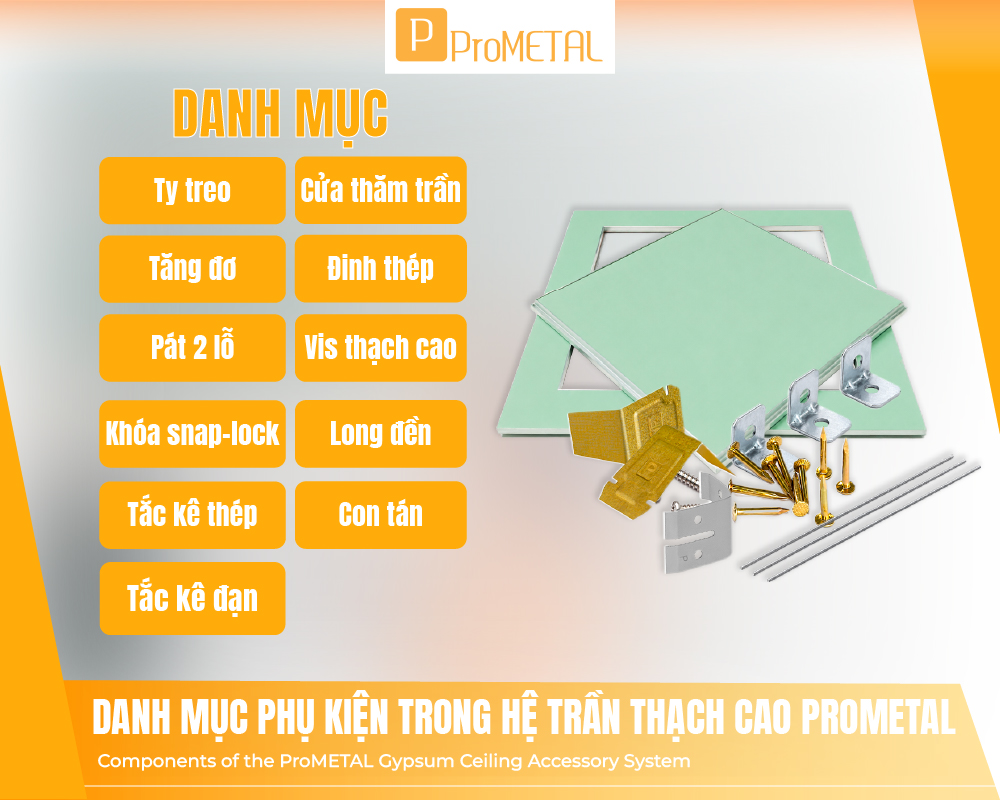
| Accessory | Definition | Function |
| Suspension Rod | A steel rod used to suspend the ceiling framing system from the concrete structure above. | Supports the load and maintains the entire ceiling system at the designed elevation. |
| Turnbuckle | A component attached to the suspension rod for height adjustment. | Allows precise leveling and alignment of the ceiling plane before board installation. |
| 2-Hole Connection Bracket | A connector used between the suspension rod and the main framing member. | Transfers loads from the framing system to the suspension rod and ensures a secure connection. |
| Snap-Lock Connector | A locking component connecting the main runner and cross runner. | Secures framing intersections, enabling fast installation and system stability. |
| Steel Anchor | An anchoring accessory fixed into the concrete structure. | Secures suspension points and framing components to the building structure. |
| Hammer-Set Anchor | A specialized anchor used for suspension rods and load-bearing connections. | Creates a strong anchorage point between the suspension rod and the concrete ceiling. |
| Nut | A threaded fastener used to tighten and secure connections. | Holds suspension rods, brackets, and other accessories firmly in place. |
| Washer | A metal disc used together with nuts. | Distributes tightening force, reduces deformation, and improves connection stability. |
| Gypsum Board Screw | A specialized screw designed for fastening gypsum boards to the framing system. | Secures gypsum boards firmly while minimizing the risk of cracking or damage. |
| Steel Nail | A fast-fixing accessory used during installation. | Assists in installation and reinforces specific connection points. |
| Ceiling Access Panel | An opening panel installed in the ceiling to provide access to the service cavity above. | Allows convenient inspection and maintenance of electrical, plumbing, and HVAC systems without dismantling the ceiling. |
III. Common Installation Errors Related to Ceiling Accessories
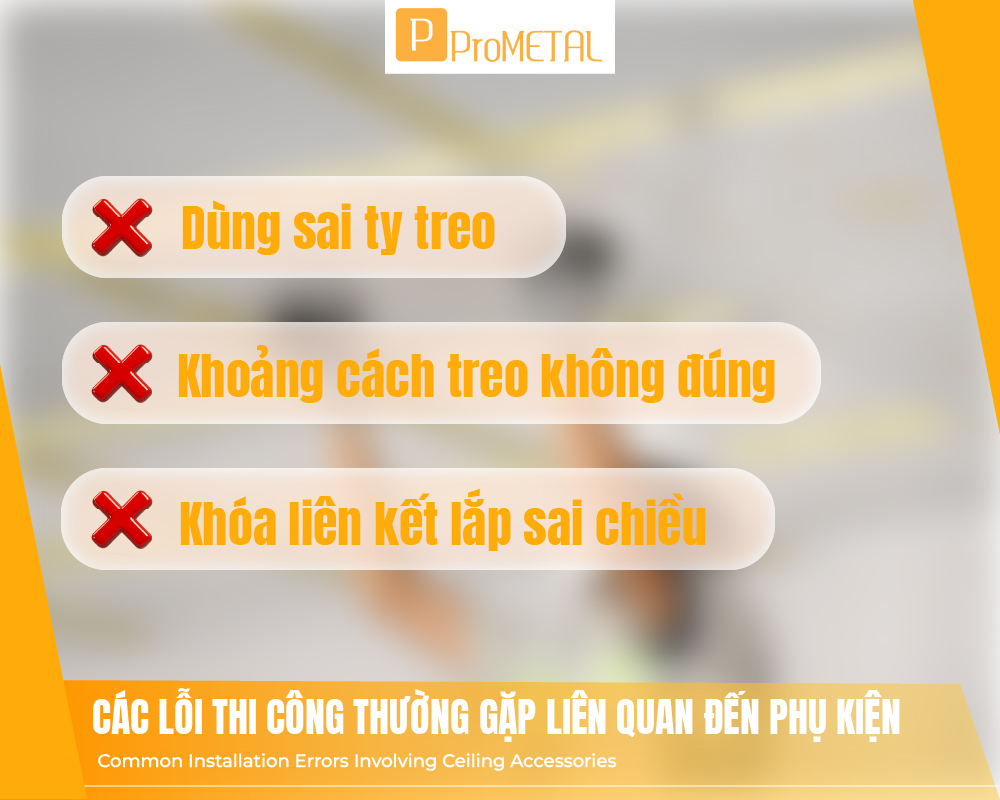
1. Incorrect Selection of Suspension Rods
Using suspension rods that do not meet the load requirements of the ceiling framing system is a common mistake. This often occurs when undersized rods are selected or when accessories of unknown origin and quality are used.
Insufficient load-bearing capacity can cause the framing system to gradually sag over time, resulting in localized ceiling deflection and reduced structural performance.
2. Improper Suspension Spacing
Another common installation error is exceeding the recommended spacing between suspension rods specified for the framing system.
When suspension points are placed too far apart, the main runner between two support points must carry the load without adequate support. Over time, this can cause the framing member to bend downward, leading to ceiling sagging.
This is one of the most frequent installation issues and is often the result of attempting to reduce the number of suspension rods to save costs.
3. Incorrect Installation of Snap-Lock Connectors
Snap-lock connectors are designed with a specific installation direction. Although a connector may appear to fit when installed in reverse, it will not engage properly or provide a secure lock.
This error is often difficult to identify through visual inspection alone. However, over time, the connection may loosen or separate, causing cross runners to shift out of alignment. As a result, cracks may begin to appear at the joints of the gypsum boards below.
IV. How to Prevent and Correct Installation Errors

1. Inspect Materials Carefully Before Installation
Before installation begins, all suspension rods, connectors, brackets, and other accessories should be inspected to ensure they are the correct type and size, and are free from bending, corrosion, manufacturing defects, or other damage.
Using high-quality, specification-compliant materials helps minimize potential issues during both installation and long-term use.
2. Follow the Manufacturer’s Installation Guidelines
Each ceiling framing system has specific requirements regarding load capacity, suspension spacing, and accessory installation methods.
Adhering to the manufacturer’s technical guidelines ensures the structural performance of the ceiling system while reducing the risk of sagging, loose connections, and joint cracking.
3. Use Specialized Installation Tools
Professional installation tools help achieve greater accuracy, particularly when installing connection points and snap-lock connectors.
Proper installation techniques ensure secure connections and reduce errors that may occur with manual installation methods.
4. Inspect and Approve the Framing System Before Board Installation
Before installing gypsum boards, the entire suspension system should be checked, including suspension rod spacing, the security of all connectors, and the overall levelness of the framing system.
Identifying and correcting issues at this stage can save significant time and repair costs later in the project lifecycle.
V. Consequences of Choosing the Wrong Accessories
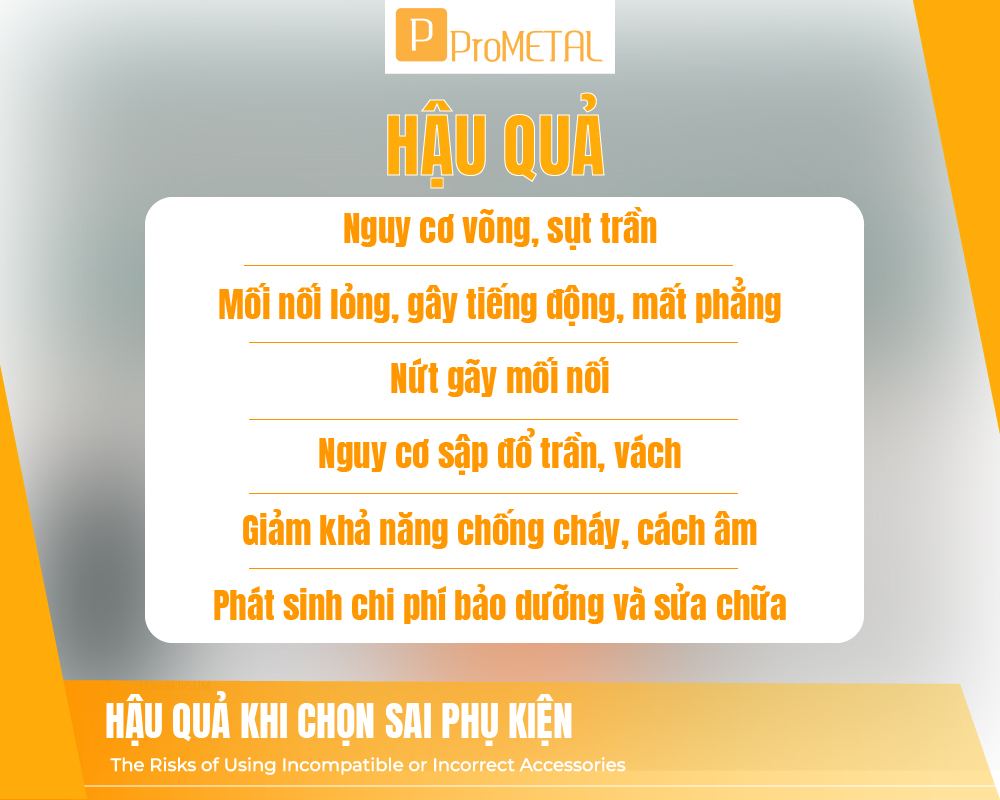
1. Risk of Ceiling Sagging or Partial Collapse
Suspension rods with insufficient load-bearing capacity present a direct structural risk to the ceiling system.
In less severe cases, the ceiling may experience localized sagging and gypsum board joint cracking. In more serious situations-particularly in large ceiling areas or where additional loads from mechanical, electrical, or HVAC equipment are present-the risk of partial ceiling collapse increases significantly.
2. Loose Connections, Noise, and Uneven Ceiling Surfaces
When snap-lock connectors are not properly matched with the framing members, the connection between the main runner and cross runner may become unstable.
Early signs of this issue often include squeaking or creaking noises when the structure is subjected to minor movement or vibration. Over time, the ceiling surface may become uneven as loosened connection points allow framing members to shift.
Repairing this problem typically requires removing gypsum boards throughout the affected area before the framing system can be corrected.
3. Joint Cracking
Weak or unstable connections between framing members, or between gypsum boards and the framing system, can create stress concentrations at adjoining points.
Over time, these stresses may lead to visible cracks at joints, negatively affecting both the appearance and overall quality of the installation.
4. Risk of Ceiling or Partition Failure
This is the most serious consequence of using substandard accessories or improper installation methods.
In large-scale projects or ceilings supporting multiple services above the ceiling cavity, partial ceiling collapse or even complete system failure may occur if the connection system cannot safely support the required loads.
5. Reduced Fire Resistance and Acoustic Performance
Gypsum ceiling systems are designed to achieve specified fire-resistance and sound-insulation performance when all components work together as an integrated system.
Using incompatible or improperly selected accessories may weaken the integrity of the system, reducing its ability to meet the intended technical performance requirements.
6. Increased Maintenance and Repair Costs
Accessory-related issues are often difficult to detect from the finished ceiling surface.
When failures occur, repairs frequently require the removal of part or all of the affected ceiling area, resulting in additional labor costs, replacement materials, project delays, and higher maintenance expenses.
VI. Principles for Selecting the Right Ceiling Accessories
1. Choose Accessories Designed for the Same Framing System
One of the most important principles in gypsum ceiling installation is to use accessories that are specifically designed to be compatible with the framing system being installed. Each manufacturer typically has its own standards regarding dimensions, tolerances, and connection mechanisms between system components.
Combining framing members from one system with suspension rods, connection brackets, or locking components from another system may not always cause immediate installation issues. However, even small differences in dimensions or load-bearing capacity can affect the long-term stability and performance of the connections.
The ProMETAL accessory range is designed to work seamlessly with the ProMETAL ceiling framing system, ensuring installation compatibility, load-bearing performance, and overall system stability. Using components from the same system helps minimize technical inconsistencies, improve installation efficiency, and enhance the long-term durability of the completed project.
For this reason, rather than selecting accessories individually based solely on price or availability, it is recommended to use the accessories specified for the framing system being installed to ensure proper assembly and reliable system performance.
2. Verify Load Capacity and Application Requirements
Not all ceiling systems operate under the same conditions. Decorative ceilings, acoustic ceilings, and ceilings that support HVAC systems, electrical services, or other technical equipment above the ceiling cavity each have different load requirements and performance expectations.
Therefore, when selecting suspension rods, connection brackets, anchors, and other fastening components, it is important to evaluate both the load-bearing capacity of each accessory and the technical recommendations provided by the manufacturer.
Making the correct selection from the beginning helps prevent issues such as ceiling sagging, loose connections, and costly reinforcement work after the project has already been completed.
VII. Frequently Asked Questions

1. Do Rusted Suspension Rods Need to Be Replaced?
If the suspension rod only shows minor surface rust and its structural integrity remains intact, it can generally continue to be used.
However, if the corrosion is severe, penetrates into the rod body, or reduces its load-bearing cross-section, the rod should be replaced immediately to maintain the safety and performance of the ceiling system.
2. Where Should a Ceiling Access Panel Be Installed?
Ceiling access panels should be located near critical service points above the ceiling, such as electrical junction boxes, water valves, HVAC duct connections, and sprinkler system components.
These access points should be identified and incorporated into the design stage whenever possible to facilitate future inspection and maintenance.
3. Can Standard Screws Be Used to Install Gypsum Boards?
It is not recommended.
Gypsum board screws are specifically designed with unique head profiles and thread patterns that allow them to secure the board firmly without damaging the surface paper liner.
Using standard screws may cause damage around the fastening points and reduce the board’s holding strength over time.
4. Are ProMETAL Accessories Available for Individual Purchase?
Yes.
Please contact ProMETAL for technical consultation and pricing on individual accessories that are compatible with your existing framing system.
5. How Can You Tell Whether a Snap-Lock Connector Has Been Installed Correctly?
When installed correctly, a snap-lock connector should produce a distinct “click” sound and should not rotate or wobble after locking into place.
If the connection still feels loose or no locking sound is heard, the installation should be checked and corrected before proceeding.
VIII. Conclusion: Why Are Ceiling Accessories So Important?
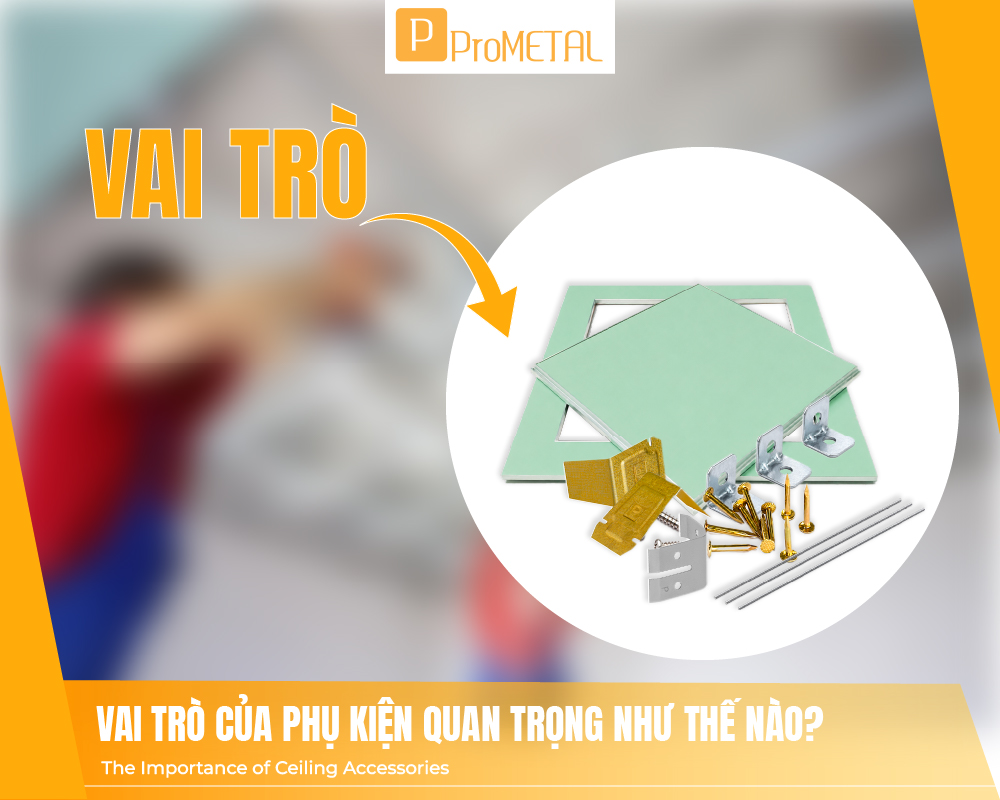
A durable gypsum ceiling system depends on more than just the framing members and gypsum boards. Components such as suspension rods, connection brackets, snap-lock connectors, and ceiling access panels are essential links that directly affect the safety, stability, and service life of the entire system.
Selecting compatible, high-quality accessories from the outset is one of the simplest and most effective ways to reduce maintenance risks, improve installation performance, and ensure long-term reliability.
Choosing accessories that are fully compatible with the framing system, appropriately rated for the required loads, and supplied by a trusted manufacturer is the best way to prevent costly issues in the future.
For professional advice on selecting the right accessories for your project, contact ProMETAL:
📞 Hotline: +84 911 674 779
🌐 Website: ProMETAL.com.vn
📩 Email: sales@ProMETAL.com.vn