
 Tiếng Việt
When dividing interior spaces, many project owners, contractors, and homeowners often wonder: should they build brick walls or use drywall partitions?
The answer is: drywall partitions can replace brick walls in many interior partition applications, especially in projects that require fast installation, reduced structural load, easier renovation, and flexible integration of technical systems.
However, drywall partitions cannot replace load-bearing walls and are not suitable for every location. The choice should be based on the intended function, technical requirements, load conditions, acoustic performance, fire resistance requirements, and actual operating conditions of the project.
I. How Are Drywall Partitions Different from Brick Walls?
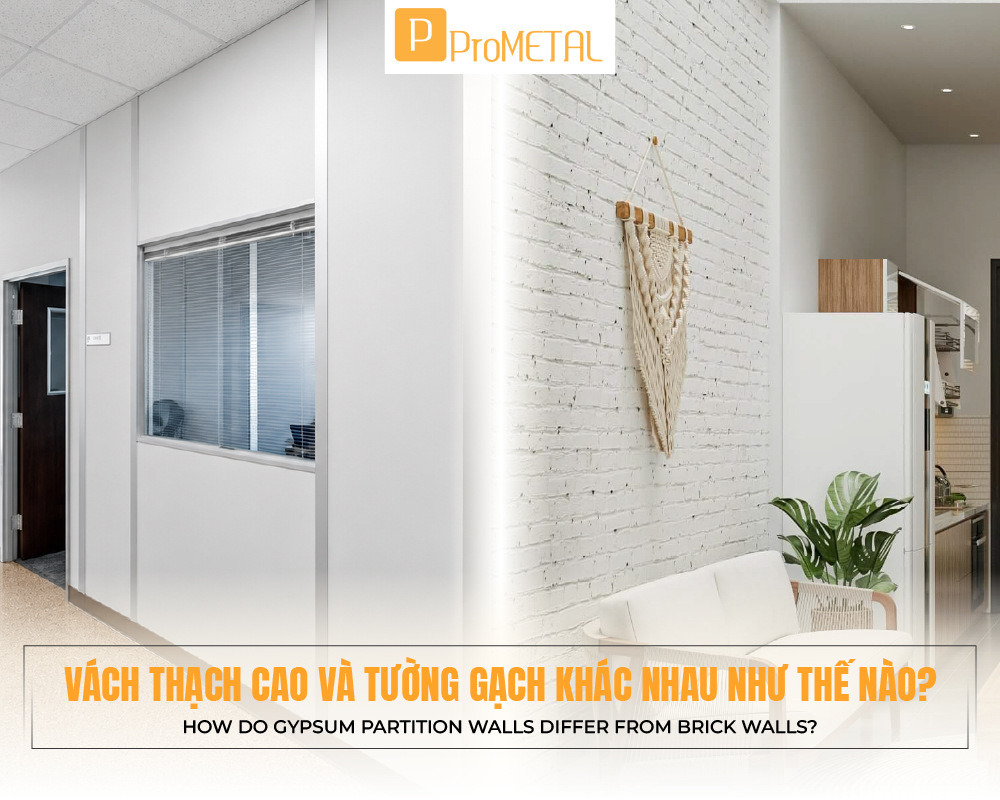
A drywall partition is a lightweight wall system that typically consists of metal framing, gypsum boards, and connection accessories, with optional additions such as mineral wool, glass wool, or specialized boards depending on design requirements.
A brick wall is a traditional masonry wall system constructed using bricks and cement mortar, followed by plastering and surface finishing.
| Criteria | Drywall Partition | Brick Wall |
|---|---|---|
| Structure | Metal framing, gypsum boards, accessories | Brick masonry, mortar, plaster layers |
| Weight | Lightweight, helping reduce structural load | Heavier, placing greater loads on the structure |
| Installation | Fast assembly with fewer wet construction processes | Bricklaying, plastering, drying time, and multiple construction stages |
| Renovation | Easy to dismantle and modify layouts | More complex and time-consuming to demolish or alter |
| M&E Integration | Easy to route electrical, plumbing, and air-conditioning systems within the wall cavity | Often requires wall chasing when repairing or adding systems |
| Applications | Interior partitions, offices, apartments, showrooms | Permanent walls and areas requiring greater solidity |
The key point is that neither solution is better in every situation. Drywall partitions offer advantages in speed, lightweight construction, and flexibility, while brick walls are more suitable for locations requiring permanent masonry, higher impact resistance, or specific design requirements.
II. When Should Drywall Partitions Be Used Instead of Brick Walls?
1. Offices
Office layouts often change depending on staffing levels, departments, or operating models. Drywall partitions make it easier to create meeting rooms, workspaces, executive offices, or functional areas quickly and allow for easier renovation when layouts need to change.
2. Apartments and Residential Buildings
In residential projects, drywall partitions are suitable for dividing bedrooms, home offices, dressing rooms, small storage areas, or other interior spaces that do not require load-bearing walls.
Thanks to their lightweight construction, drywall partitions are particularly suitable for apartments and renovation projects.
3. Hotels, Showrooms, and Shopping Malls
Commercial projects often require fast construction, high-quality finishes, and flexible layouts. Drywall partitions help shorten construction schedules while making it easier to install electrical systems, air-conditioning, lighting, signage, and other technical systems.
4. Schools, Hospitals, and Public Buildings
For areas that require flexible space division, drywall partitions can be designed to meet specific requirements such as sound insulation, fire resistance, or moisture resistance, depending on the wall configuration and the project’s technical documentation.
III. Key Advantages of Drywall Partitions

Faster and Cleaner Installation
Drywall partitions are installed using an assembly-based construction method, reducing wet processes such as bricklaying, plastering, and drying time.
This helps shorten the overall finishing process, making drywall partitions particularly suitable for projects with tight handover schedules.
Lightweight Construction
Compared with brick walls, drywall partitions are significantly lighter, helping reduce structural loads.
This is a major advantage for renovation projects, apartments, high-rise buildings, and projects where structural load optimization is important.
Easier Integration of Technical Systems
The cavity inside a drywall partition makes it easier to install electrical wiring, technical pipes, sockets, switches, and M&E systems.
When repairs or modifications are required, these systems are also easier to access compared with those embedded in brick walls.
Flexible for Renovation
When layouts need to be changed, rooms expanded, or functions adjusted, drywall partitions are easier to dismantle and reinstall.
This is one of the reasons they are widely used in offices, showrooms, shopping malls, and commercial spaces.
Additional Performance Features Can Be Integrated
Depending on design requirements, drywall partition systems can be combined with moisture-resistant boards, fire-resistant boards, mineral wool, or glass wool to improve acoustic performance, fire resistance, or suitability for specific service conditions.
IV. Common Misconceptions About Drywall Partitions
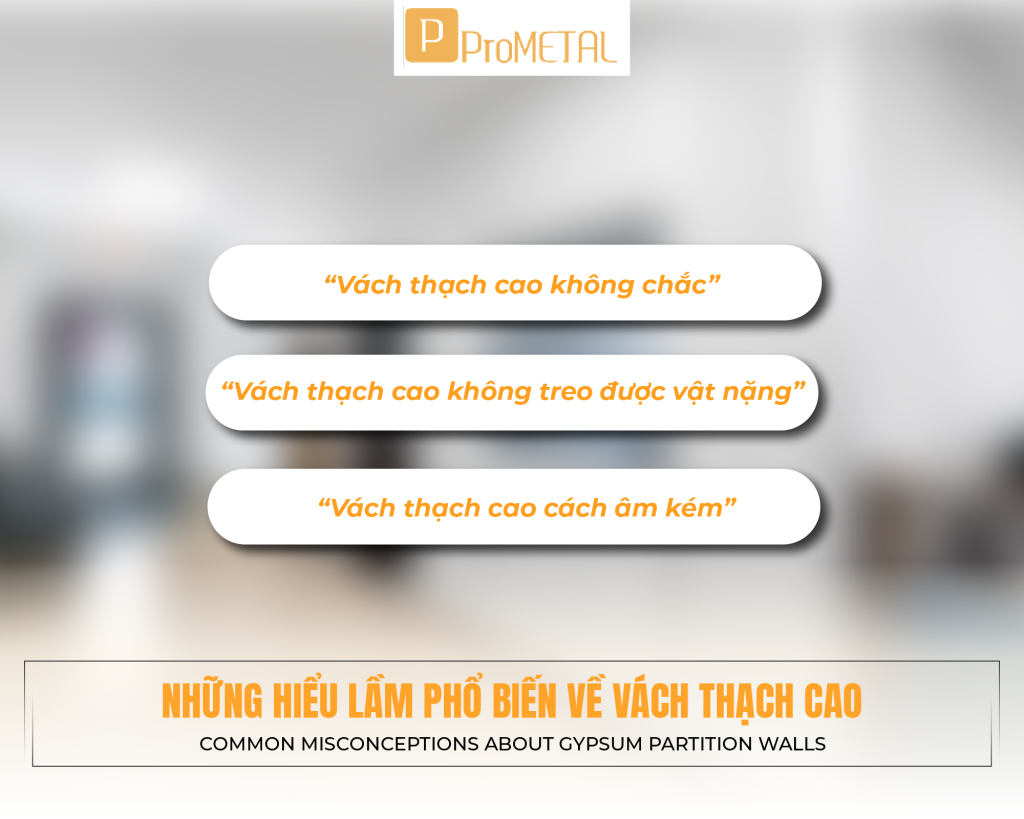
1. “Drywall Partitions Are Not Strong”
This is not entirely correct. The stability of a drywall partition depends on the entire wall system, including the framing system, board type, number of board layers, framing spacing, accessories, and installation quality.
A properly designed and correctly installed drywall partition can meet the functional requirements of many interior applications.
2. “Drywall Partitions Cannot Support TVs, Cabinets, or Shelves”
Drywall partitions can support mounted equipment when properly designed.
Their load-bearing capability depends on the load, mounting position, type of fixing accessories, and internal reinforcement solution.
For TVs, wall-mounted cabinets, or heavy equipment, the mounting location should be identified during the design stage so that appropriate reinforcement can be installed.
3. “Drywall Partitions Have Poor Sound Insulation”
Sound insulation should not be evaluated based only on the name of the material.
Acoustic performance depends on the complete wall configuration, including wall thickness, number of board layers, board type, cavity depth, insulation materials inside the cavity, and treatment of perimeter joints.
If better sound insulation is required, the correct wall configuration must be selected rather than simply changing the outer board layer.
V. Why Does the Framing System Determine the Quality of a Drywall Partition?
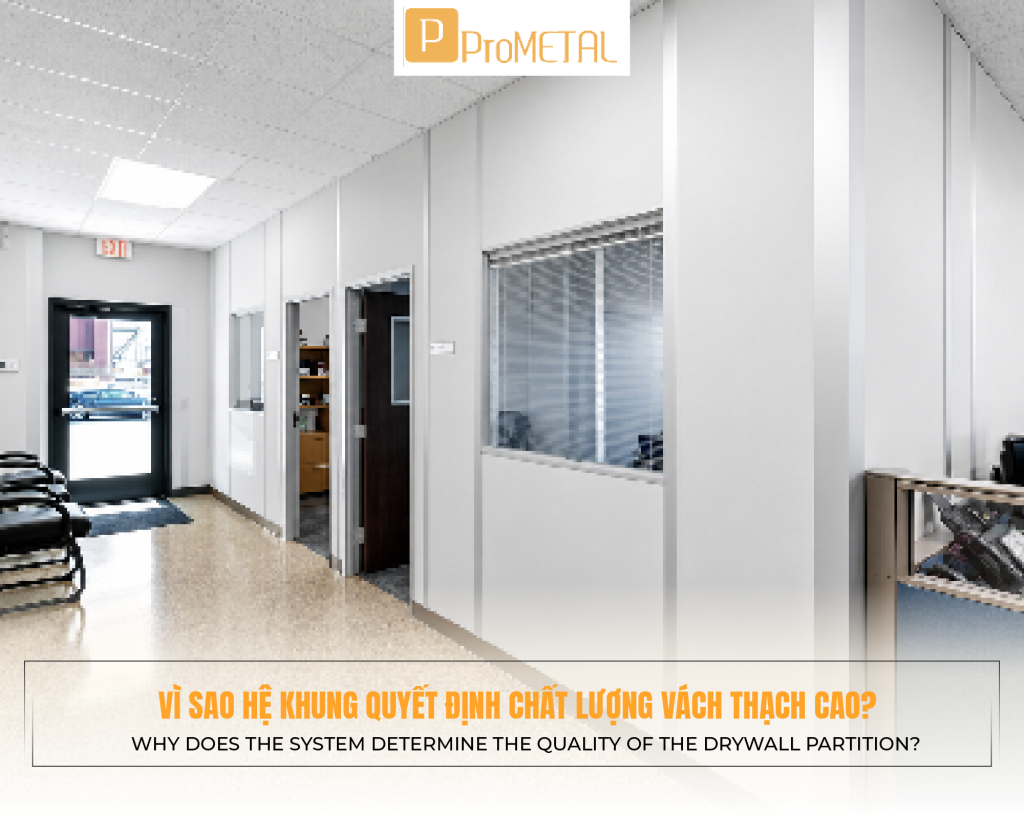
In a drywall partition system, the framing provides the shape, structural support, and stability for the entire wall.
If the framing system is weak, incorrectly specified, or improperly installed, the partition may experience vibration, deformation, joint cracking, or reduced service life.
A high-quality framing system helps to:
- Keep the partition straight, flat, and stable.
- Improve overall rigidity during use.
- Support correct installation of boards and accessories.
- Create technical cavities for electrical, plumbing, and air-conditioning systems.
- Support wall configurations designed for acoustic, fire-resistant, or moisture-resistant performance.
Therefore, when choosing a drywall partition system, it is not enough to ask “which board should be used.” It is also important to consider which framing system, accessories, wall configuration, and installation standards should be applied.
VI. ProMETAL Partition System Solutions
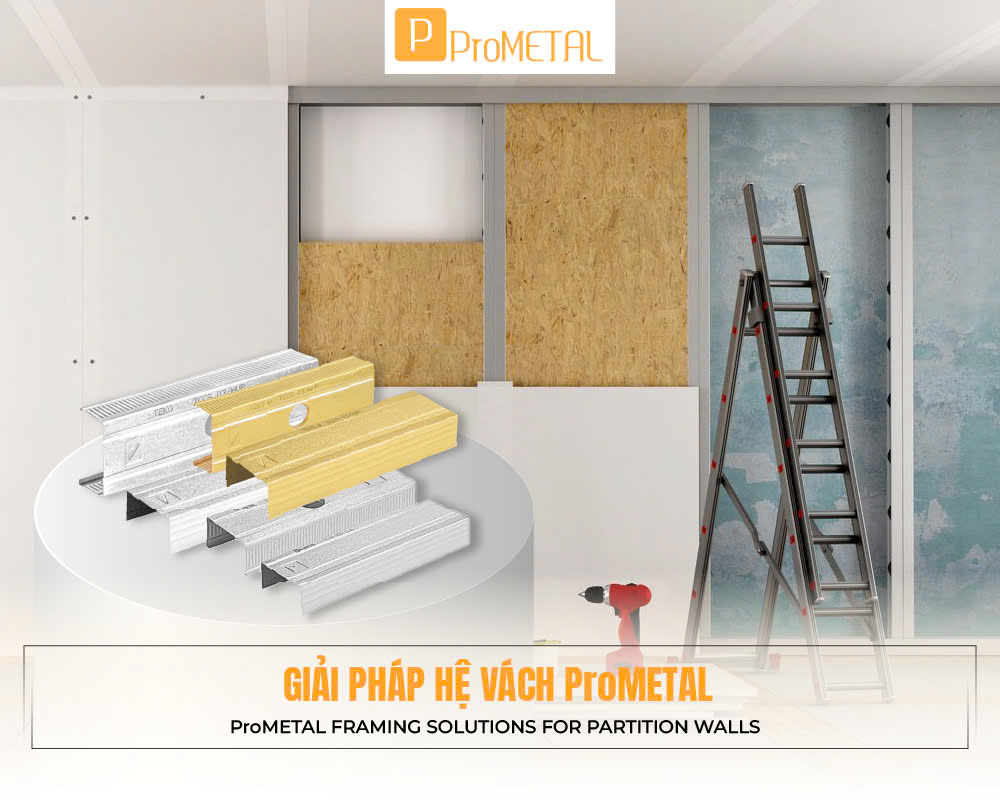
ProMETAL provides compatible partition framing systems and accessories suitable for various drywall partition configurations in residential, office, and commercial projects.
The ProMETAL partition framing system helps define the wall structure, support gypsum boards, and create a stable foundation for the entire partition system.
Benefits of the ProMETAL Partition System
- Suitable for a wide range of common partition configurations.
- Supports fast and coordinated installation.
- Creates convenient technical cavities for M&E systems.
- Can be combined with gypsum boards, acoustic insulation materials, or specialized boards depending on design requirements.
- Helps improve the stability and service life of the partition system when installed correctly.
For projects requiring sound insulation, fire resistance, or moisture resistance, the partition system should be selected according to the correct technical configuration, including the framing system, board type, number of board layers, insulation materials, and compatible accessories.
VII. Checklist Before Installing a Drywall Partition System
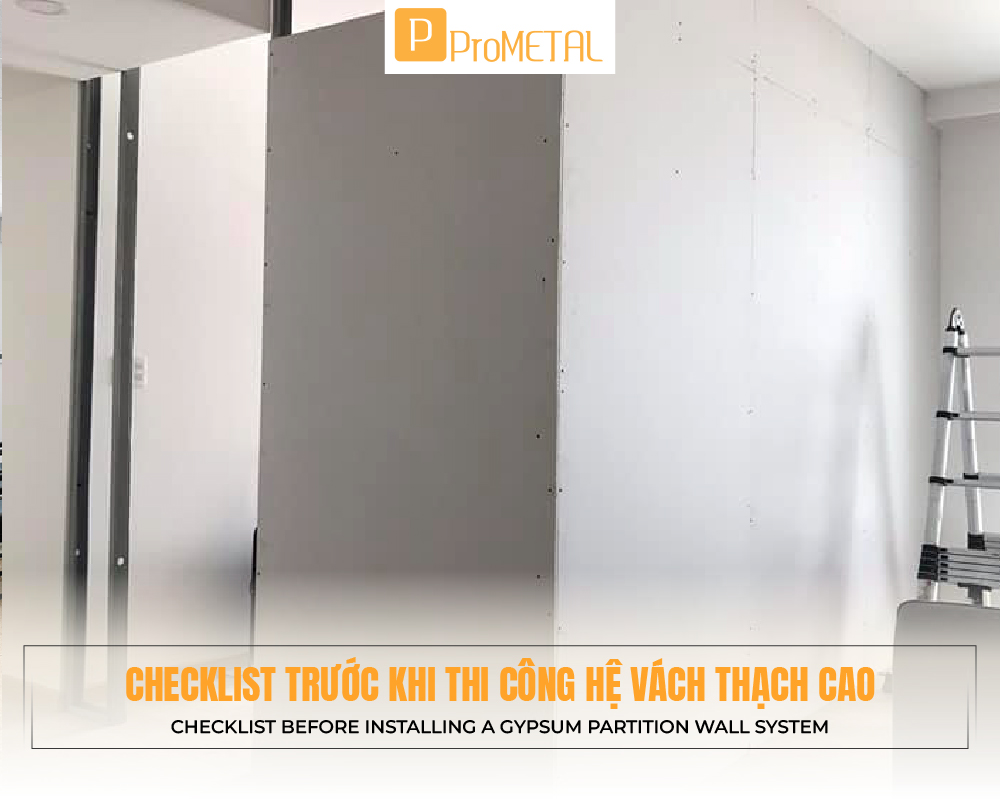
Before deciding to use drywall partitions instead of brick walls, check the following:
- Is the wall load-bearing?
- Is the wall intended for space division, sound insulation, fire resistance, or simple separation?
- Is the area exposed to high humidity or direct contact with water?
- Will TVs, cabinets, shelves, or heavy equipment be mounted on the wall?
- Are there specific acoustic, fire-resistant, or moisture-resistant requirements?
- Are the framing system, boards, and accessories compatible?
- Have the positions of doors, electrical outlets, switches, and M&E systems been determined?
- Does the installation team fully understand the technical configuration of the wall system?
This checklist helps minimize potential risks while ensuring that the partition system performs according to its intended function.
VIII. Frequently Asked Questions – FAQs
1. Can drywall partitions replace brick walls?
Yes, in many interior partition applications.
However, drywall partitions cannot replace load-bearing walls or locations where permanent masonry walls are specifically required by the structural design.
2. Are drywall partitions durable?
Yes, when designed with the correct configuration, an appropriate framing system, and proper installation techniques.
Durability depends on the entire wall system, not only on the gypsum boards.
3. Can a TV be mounted on a drywall partition?
Yes, provided that suitable reinforcement and fixing accessories are used according to the load.
The mounting location should ideally be identified during the design stage.
4. Do drywall partitions provide good sound insulation?
Their acoustic performance can be improved when the correct wall configuration is used, for example by increasing the number of board layers, adding mineral wool or glass wool inside the cavity, and properly treating perimeter joints.
5. When should brick walls be used?
Brick walls should be selected for areas requiring permanent masonry walls, higher impact resistance, structural functions, or locations where the design specifically requires masonry construction.
IX. Conclusion
Drywall partitions and brick walls each serve different purposes in construction.
Brick walls are suitable for areas requiring permanence, solidity, or structural functions. Drywall partitions are suitable for interior partition applications that require fast installation, lightweight construction, flexibility, and easier renovation.
The key is not to determine which solution is “better,” but to choose the solution that is most suitable for the function, operating conditions, and technical requirements of the project.
With its compatible partition framing systems and accessories, ProMETAL provides stable and flexible drywall partition solutions suitable for a wide range of residential, office, hotel, showroom, and shopping mall projects.
ProMETAL – A Solid Foundation for Modern Drywall Partition Systems.
Contact ProMETAL for advice on selecting the right partition framing system, gypsum boards, and accessories for your project.
Hotline: 0911 674 779
Website: ProMETAL.com.vn
Email: sales@ProMETAL.com.vn