
 Tiếng Việt
Gypsum ceilings can have a long service life when properly designed, installed, and used. However, many projects still experience issues such as joint cracks, sagging, or premature deterioration due to various factors.
Understanding the causes and applying the right solutions from the beginning can help improve durability, maintain aesthetics, and reduce future repair costs.
In this article, ProMETAL will help you identify signs of deterioration, explain 7 common causes of premature gypsum ceiling deterioration, and suggest solutions to keep your ceiling system durable and visually appealing for years to come.
I. Signs That a Gypsum Ceiling Is Deteriorating
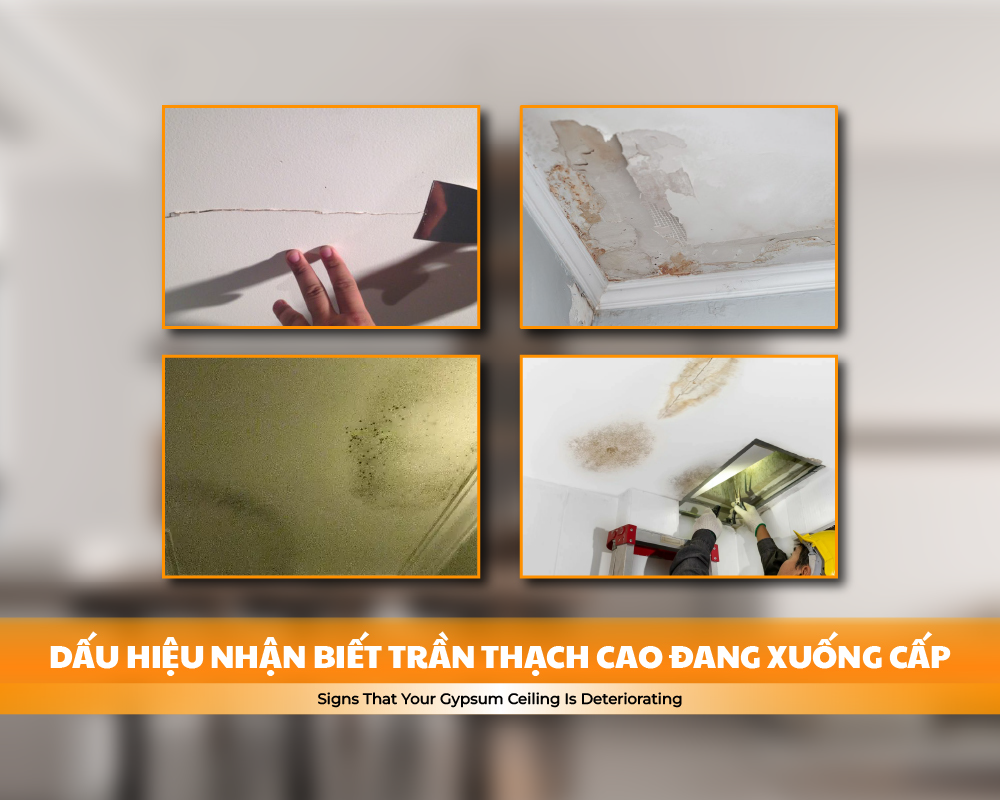
Gypsum ceilings usually do not fail suddenly. Instead, warning signs often appear beforehand. The ceiling should be inspected if one or more of the following issues occur:
- Cracks appear at joints or across the ceiling surface.
- The ceiling sags, droops, or becomes uneven in certain areas.
- Paint begins to blister or peel.
- Yellow stains, discoloration, or signs of water leakage appear.
- Joints begin to separate or joint tape starts peeling off.
- The ceiling makes unusual noises when vibrations occur.
- Certain areas feel loose or unstable.
If these signs become increasingly frequent, persist over time, or reappear after repairs, the entire framing system, gypsum boards, accessories, and potential moisture sources above the ceiling should be inspected.
II. 7 Common Causes of Premature Gypsum Ceiling Deterioration
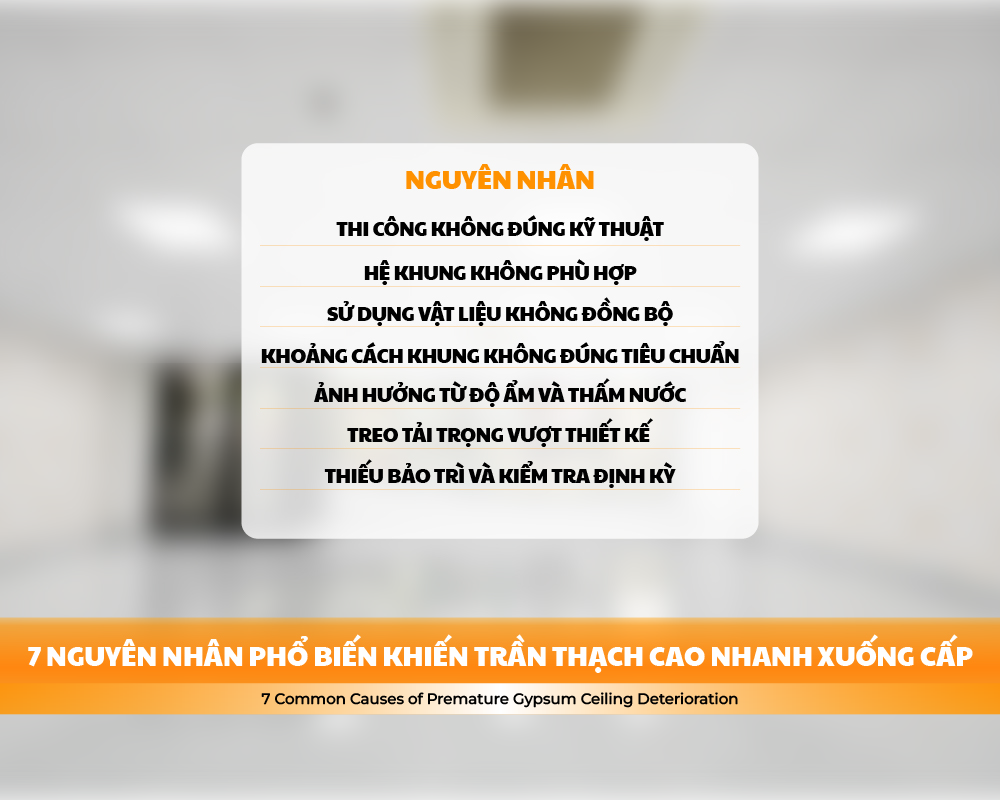
The lifespan of a gypsum ceiling depends on many factors, including material quality, the framing system, installation techniques, and conditions of use. Below are some of the most common reasons a ceiling system may deteriorate prematurely.
1. Improper Installation
This is one of the most common causes. Typical installation errors include improper hanger spacing, incorrect frame positioning, incorrect screw installation, inadequate joint treatment, or installing gypsum boards contrary to technical guidelines.
These problems may not be immediately visible after installation. However, over time, they can lead to joint cracks, surface peeling, unevenness, or localized sagging.
2. Framing System Unsuitable for the Ceiling Structure
The framing system is responsible for supporting and stabilizing the entire ceiling system. If the frame is not suitable for the ceiling area, load requirements, ceiling type, or project conditions, the ceiling may deteriorate quickly.
Common risks include:
- Ceiling sagging or drooping.
- Cracked joints.
- Uneven ceiling surfaces.
- Ceiling vibration or reduced structural stability.
Therefore, selecting the right framing system from the beginning is essential to ensuring the long-term durability of a gypsum ceiling.
3. Using Incompatible Materials
Combining frames, boards, screws, accessories, or joint compounds from different systems may reduce compatibility during installation.
When components are not properly matched, connections may become less secure, surface flatness may be more difficult to control, and the ceiling may develop problems during use.
A better solution is to use a coordinated material system with clear technical guidelines that is suitable for the required ceiling structure.
4. Incorrect Framing Spacing
The spacing between frame members, hangers, and suspension points should follow the technical specifications of the selected system.
If the spacing is too wide or unsuitable for the actual load, the gypsum boards may be subjected to uneven forces, increasing the risk of sagging, drooping, or cracking over time.
This is a common issue in projects where contractors attempt to reduce material usage, resulting in decreased stability of the overall ceiling system.
5. Moisture and Water Leakage
Moisture and water leakage are among the most common causes of premature gypsum ceiling deterioration.
Water may come from the roof, rooftop terrace, bathrooms on upper floors, leaking pipes, or condensation from air-conditioning systems.
Prolonged exposure to moisture may cause:
- Yellow stains or discoloration.
- Blistering or peeling paint.
- Softened or deformed gypsum boards.
- Mold or musty odors.
- Localized sagging in water-damaged areas.
Important note: Simply repainting the surface is not recommended. The source of the water leakage must be completely resolved before repairing the ceiling.
6. Hanging Equipment Beyond the Designed Load Capacity
Chandeliers, ceiling fans, cassette air conditioners, speakers, cameras, and decorative equipment can increase the load placed on the ceiling system.
Heavy equipment should not be attached directly to gypsum boards or the ceiling system unless proper reinforcement has been designed.
Independent suspension points or dedicated load-bearing structures should be used according to the project design.
Incorrect installation of heavy equipment may cause the ceiling to sag, vibrate, crack, or become unsafe during use.
7. Lack of Regular Inspection and Maintenance
Many projects only carry out repairs once major cracks, severe sagging, or serious water leakage have already occurred.
At that stage, repair costs are often significantly higher than they would have been if the problem had been detected and addressed earlier.
Regular inspections can help identify issues such as water leakage, minor joint cracks, peeling paint, unstable suspended equipment, or areas where the ceiling is beginning to lose its flatness.
III. How to Repair a Deteriorating Gypsum Ceiling
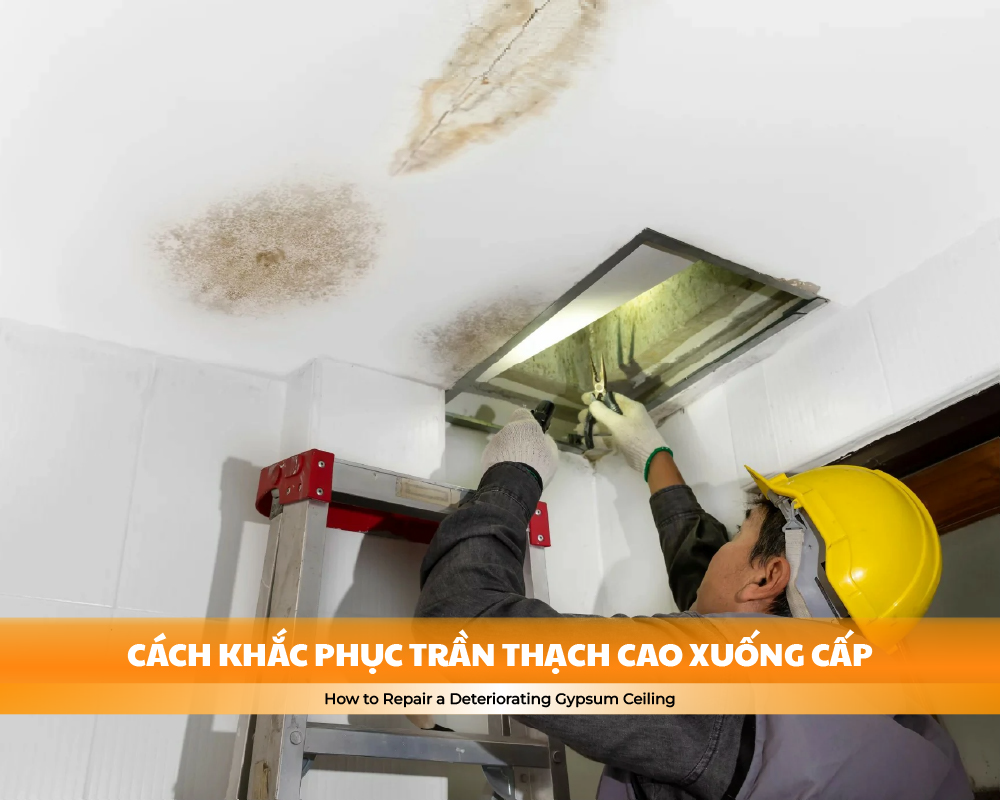
Depending on the severity of the damage, a gypsum ceiling may require localized repairs, partial replacement, or even complete replacement.
Correctly identifying the root cause will help determine the most appropriate solution, reduce unnecessary costs, and ensure long-term durability.
1. Cases Where Local Repairs May Be Sufficient
Localized repairs may be appropriate when the damage is minor and the framing system remains stable:
- Minor cracks: Retreat the joint, apply finishing compound, and repaint.
- Water stains: Fix the source of the leakage first, then repair the surface.
- Peeling paint: Remove the damaged coating, prepare the surface, and repaint.
- A small number of damaged boards: Replace individual boards if the framing system is still in good condition.
2. Cases Where Replacement Should Be Considered
Partial or complete replacement of the ceiling system should be considered when:
- The ceiling is sagging across a large area.
- The framing system is warped, rusted, or deformed.
- Cracks repeatedly reappear after repairs.
- The ceiling has suffered severe water damage for an extended period.
- The building is being renovated or the lighting, air-conditioning, or suspended equipment systems are being changed.
Before carrying out repairs, the entire ceiling system should be inspected to identify the actual cause.
If only the surface is repaired without addressing the root cause, the same problem may return shortly afterward.
IV. How to Prevent Gypsum Ceiling Deterioration
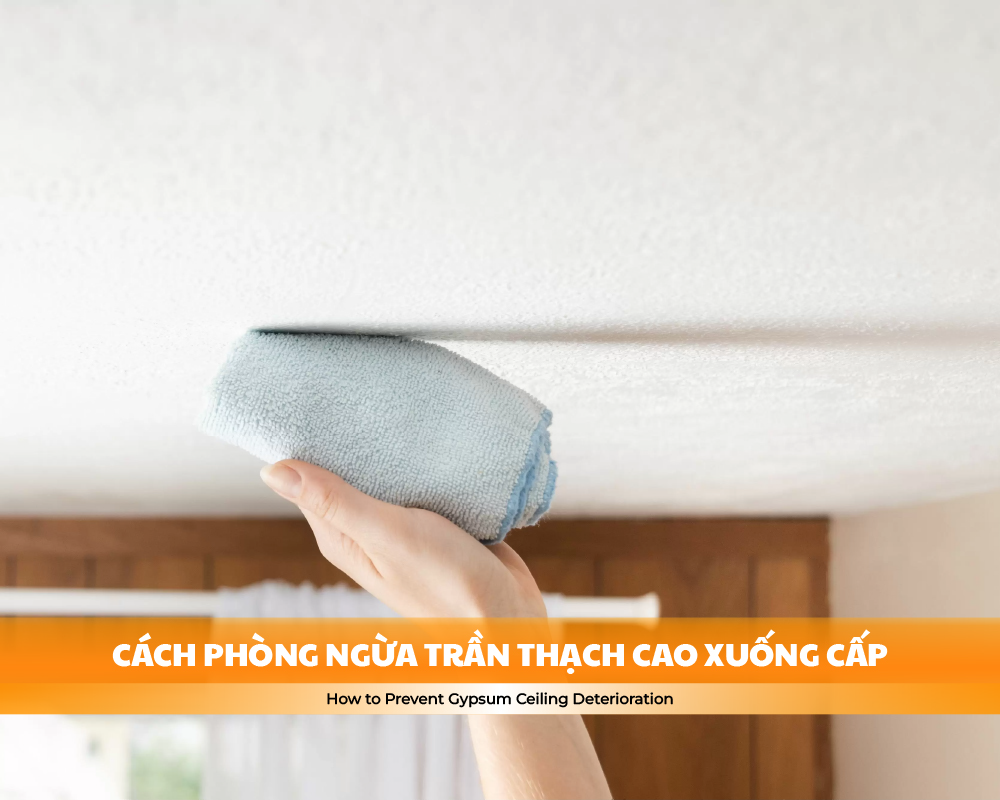
Most problems such as cracking, sagging, drooping, or yellow staining can be minimized when properly controlled from the beginning.
Homeowners, contractors, and project owners should consider the following:
- Select a framing system suitable for the ceiling structure.
- Use compatible materials and accessories.
- Follow the correct spacing requirements for frame members and suspension points.
- Treat joints according to the proper technical procedure.
- Determine the locations of lighting, air-conditioning units, speakers, and suspended equipment in advance.
- Do not hang heavy objects directly from gypsum boards.
- Thoroughly inspect waterproofing, plumbing, and air-conditioning systems before closing the ceiling.
- Carry out regular maintenance to detect abnormalities early.
A durable and visually appealing ceiling system depends not only on the gypsum boards themselves, but also heavily on the framing system, accessories, and installation workmanship.
V. ProMETAL Framing Solutions for Durable and Stable Gypsum Ceilings
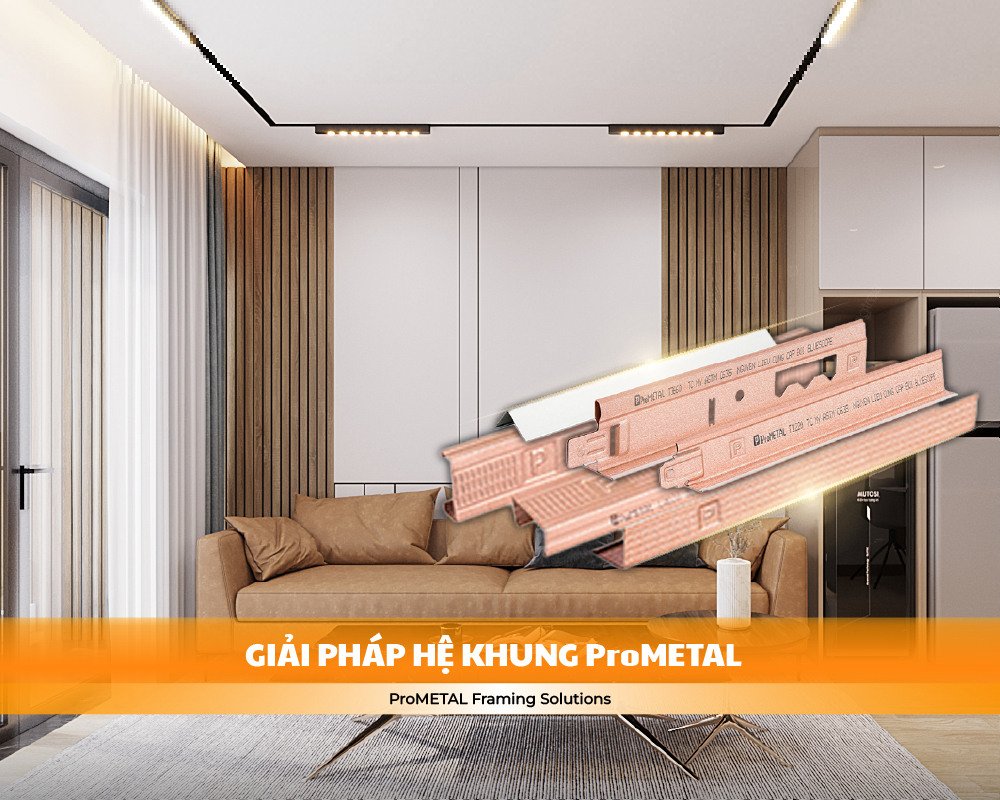
To minimize premature gypsum ceiling deterioration, choosing a compatible framing system and accessories from the beginning is extremely important.
The ProMETAL ceiling framing system is developed to accommodate various gypsum ceiling configurations in residential properties, offices, and commercial buildings.
When installed according to technical requirements, the framing system supports the gypsum boards, maintains ceiling flatness, and helps reduce risks such as sagging, joint cracking, and localized instability.
1. ProMETAL Ceiling Framing System
The ProMETAL ceiling framing system serves as the main load-bearing structure that shapes and supports the entire gypsum ceiling system.
With an integrated design and a wide range of specifications, the framing system can accommodate various ceiling configurations, contributing to long-term stability and helping reduce problems such as sagging or joint cracking when properly installed.
Advantages of the ProMETAL ceiling framing system:
- Helps maintain stability of the ceiling system.
- Suitable for various gypsum ceiling configurations.
- Convenient installation with compatible accessories.
- Supports improved durability and service life of the building.
2. Integrated ProMETAL Solution from Frame to Board
The performance and durability of a ceiling system depend not only on the framing system, but also on the combination of gypsum boards, accessories, and installation quality.
Using an integrated solution improves compatibility between components and supports stable ceiling performance in accordance with the intended design.
The integrated ProMETAL solution helps:
- Ensure compatibility between the framing system, gypsum boards, and accessories.
- Support proper installation according to technical specifications.
- Improve the durability and stability of the ceiling system.
- Reduce risks caused by incompatible materials.
VI. FAQs
1. How long does a gypsum ceiling last?
The lifespan of a gypsum ceiling depends on material quality, the framing system, installation techniques, and conditions of use.
When properly installed and regularly maintained, the ceiling system can remain stable and functional for many years.
2. Why does a newly installed gypsum ceiling still crack?
Possible causes include improper installation, inadequate joint treatment, an unsuitable framing system, or structural shrinkage and settlement during the early stages of the building’s life.
3. Can a sagging gypsum ceiling be repaired?
It depends on the severity of the damage.
If the sagging is minor and limited to the surface or a small localized area, repairs may be possible.
However, if the framing system has become deformed or deteriorated, partial or complete replacement of the ceiling system should be considered.
4. Should only the gypsum boards be replaced without replacing the framing system?
The gypsum boards should only be replaced independently if the framing system remains in good condition.
If the framing system has deteriorated or is no longer suitable, replacing only the gypsum boards will not fully resolve the underlying problem.
5. How can premature gypsum ceiling deterioration be prevented?
Use a compatible material system, follow proper installation techniques, control loads from suspended equipment, and conduct regular inspections to identify damage early.
VII. Conclusion
Gypsum ceiling deterioration can result from various factors, including selecting an unsuitable framing system, improper installation, using incompatible materials, or failing to perform regular maintenance.
Early detection of abnormal signs and timely corrective action can help prevent damage from spreading and extend the service life of the building.
To ensure stable ceiling performance over the long term, priority should be given to an integrated solution that includes the framing system, gypsum boards, and accessories, together with installation carried out according to technical guidelines.
ProMETAL provides integrated ceiling framing systems and accessories designed to meet a wide range of project requirements while contributing to improved quality and durability in residential and commercial buildings.
Contact ProMETAL for advice on selecting suitable accessories:
📞 Hotline: 0911 674 779
🌐 Website: ProMETAL.com.vn
📩 Email: sales@ProMETAL.com.vn