
 Tiếng Việt
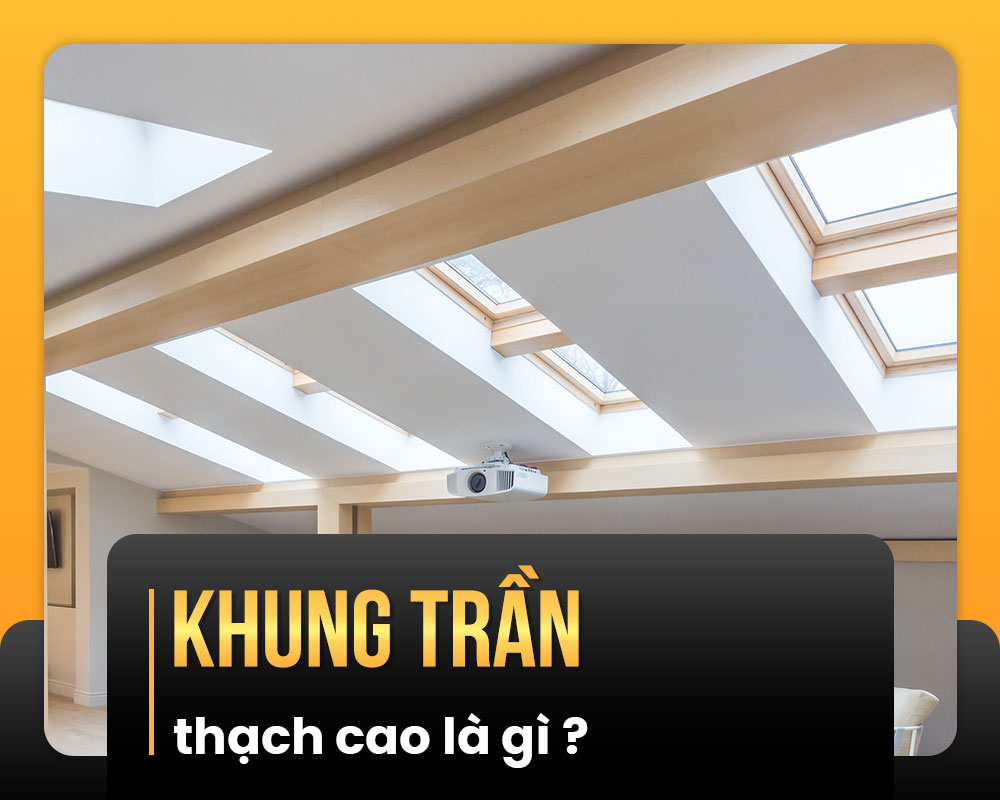
When installing a gypsum ceiling, most people focus on the gypsum boards or attractive ceiling designs, while paying little attention to the component that truly determines the durability and aesthetics of the entire ceiling system: the gypsum ceiling frame. In practice, most cases of ceiling sagging, joint cracking, corrosion, and premature deterioration are caused by poor-quality ceiling frames or non-standard installation practices.
This article provides a comprehensive explanation of what a gypsum ceiling frame is, its structure, classifications, a detailed comparison between concealed and suspended ceilings, and important considerations for selecting the most suitable framing system for your project.
I. What Is a Gypsum Ceiling Frame?
A gypsum ceiling frame is a metal structural system (typically made of galvanized steel or aluminum-zinc coated steel) installed beneath a concrete slab or roof structure to support gypsum boards. It serves as the primary load-bearing framework for the entire ceiling system.
In other words, if gypsum boards are the “surface” of the ceiling, then the gypsum ceiling frame is the skeleton that determines the durability and stability of the structure.
1. What Role Does a Gypsum Ceiling Frame Play in a Building?
In a complete gypsum ceiling system, the ceiling frame performs several essential functions:
- Supports and distributes the weight of gypsum boards to the main building structure.
- Shapes the ceiling surface, ensuring flatness, alignment, and the correct design elevation.
- Forms the framework for complex ceiling designs such as stepped ceilings, vaulted ceilings, and multi-level ceilings.
- Creates technical space for electrical wiring, plumbing systems, and fire protection systems.
A weak or non-integrated framing system can result in ceiling sagging, joint cracking, and unexpected maintenance costs after a relatively short period of use. Therefore, choosing a premium gypsum ceiling frame is not an optional upgrade-it is a fundamental requirement for a durable project.
2. Why Does the Ceiling Frame Determine Ceiling Durability and Flatness?
The gypsum ceiling framing system directly affects the lifespan and aesthetics of the ceiling through three key factors:
Load-bearing capacity: High-strength steel framing supports the weight of gypsum boards consistently, maintains a perfectly flat surface, and prevents mid-span deflection.
Structural stability: A tightly connected framework resists twisting and vibration, minimizing cracks at gypsum board joints.
Thermal movement resistance: High-quality galvanized steel framing offers stable thermal expansion and contraction, helping prevent ceiling surface cracks when environmental conditions change.
II. Structure of a Gypsum Ceiling Frame
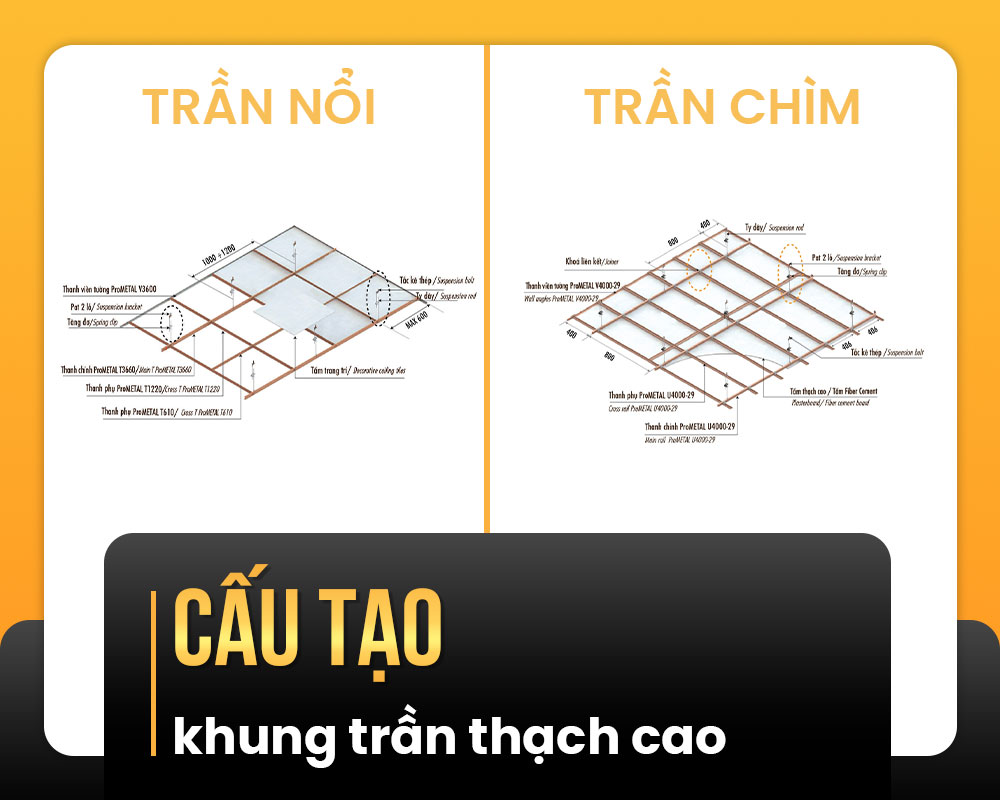
Main Components of a Ceiling Framing System
1. Main Runners, Cross Members, and Suspension Rods
A standard gypsum ceiling framing system consists of three core components:
Main Runner: The primary structural member running along the length or width of the room. It carries the main load and is suspended from the structural ceiling using suspension rods. Typical spacing between main runners ranges from 900–1,200 mm.
Cross Member: Installed perpendicular to the main runner to form a grid that supports gypsum boards. Standard spacing ranges from 400–600 mm depending on board thickness and load requirements.
Suspension Rod: Anchors the main runner to the concrete slab above. It can be adjusted in height to ensure the entire ceiling system is level and aligned with the design elevation.
2. Connecting Accessories and Their Functions
In addition to the main components, a gypsum ceiling framing system includes several important accessories:
- Perimeter Trim: Installed around the room perimeter to support the outer edge of the framing system.
- Connection Clips: Connect main runners and cross members, ensuring structural rigidity.
- Splice Connectors: Extend framing members when room dimensions exceed standard profile lengths.
Self-Drilling Screws: Used to fasten gypsum boards to framing members. Screw spacing directly affects ceiling durability.
3. Differences Between Premium and Standard Ceiling Frames
Today’s market clearly distinguishes between premium and standard gypsum ceiling framing systems:
| Criteria | Premium Ceiling Frame | Standard Ceiling Frame |
| Material | High-grade steel with superior corrosion resistance | Standard galvanized steel, thinner and more prone to corrosion |
| Thickness | Standard-compliant (>0.4 mm BMT), high load capacity | Thin, easily deformed, lower load capacity |
| Stability | Rigid, resistant to twisting, maintains ceiling flatness | Prone to sagging after 1–2 years |
| Durability | More than 10–15 years with maximum safety | Shorter lifespan, more likely to cause ceiling cracks |
III. Common Types of Gypsum Ceiling Frames
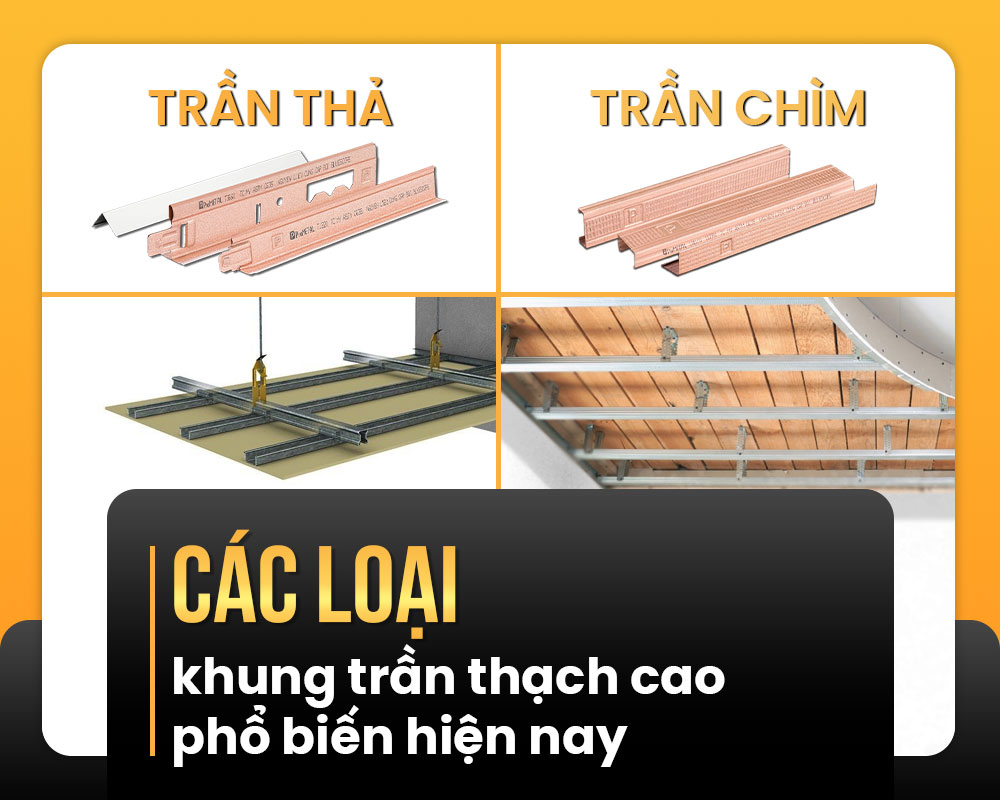
Classification by Structure and Intended Use
Gypsum ceiling framing systems are generally classified into two main categories based on their structure and intended application.
A concealed ceiling (also known as a seamless or closed ceiling) is a ceiling system in which all framing components are completely hidden above the gypsum board surface. After completion, users see only a smooth, continuous ceiling surface without visible grids or exposed metal profiles.
The concealed ceiling frame is typically installed by suspending the framing system from the concrete slab using suspension rods, followed by screwing gypsum boards onto the framework. The joints are then taped, skim-coated, and painted to create a seamless finish. This system supports flat ceilings, stepped ceilings, and flexible integration with lighting systems.
Key Characteristics of Concealed Ceilings
- Smooth and seamless ceiling surface without visible grid lines.
- Framing members are completely hidden from view.
- Clear ceiling height is reduced by approximately 10–20 cm depending on design requirements.
- Lighting fixtures and ventilation openings are integrated into the ceiling surface.
A suspended ceiling (also known as an exposed grid ceiling, lay-in ceiling, or modular ceiling) is a ceiling system where part of the metal framing structure remains visible, forming a grid pattern. Gypsum or mineral fiber ceiling panels are simply laid into the grid openings without screws or adhesives. As a result, individual panels can be lifted at any time to access the technical space above.
Key Characteristics of Suspended Ceilings
- Visible metal grid lines forming square modules.
- Standard panel sizes: 600 × 600 mm or 600 × 1,200 mm.
- Easy access to the plenum space above the ceiling.
- Suitable for integrating modular LED panels, air-conditioning diffusers, and sprinkler heads.
Should You Choose a Concealed Ceiling or a Suspended Ceiling?
If aesthetics and design flexibility are your priorities, a concealed ceiling is the ideal choice. If the project requires technical efficiency, easy maintenance, and long-term cost savings, a suspended ceiling system is often the better solution.
IV. Comparing Concealed and Suspended Ceilings

-
Comparison of Structure and Installation
The fundamental difference between the two ceiling systems lies in their installation methods and post-installation accessibility.
| Criteria | Concealed Ceiling | Suspended Ceiling |
| Installation Speed | Moderate, requires joint treatment | Faster, panels are laid into the grid without screwing |
| Access to M&E Systems | Difficult, requires opening the ceiling | Easy, simply lift the panel |
| Localized Repairs | Difficult, requires patching and repainting | Simple, individual panels can be replaced |
| Skill Requirements | High (joint finishing and painting) | Lower |
| Surface Flatness | Excellent when installed with a quality frame | Dependent on T-bar quality |
-
Comparison of Aesthetics and Design Flexibility
Advantages and Disadvantages of Concealed Ceilings: Concealed ceilings provide a completely smooth and continuous surface without visible grids, making spaces appear larger and more elegant. They allow for stepped ceilings, curved designs, light coves, and sophisticated lighting effects. However, if the ceiling frame lacks rigidity or installation quality is poor, the surface may appear uneven under lighting, and hairline cracks can develop over time.
Advantages and Disadvantages of Suspended Ceilings: Suspended ceilings create a professional and organized appearance for working environments. They integrate seamlessly with 600 × 600 mm LED panel lights, air-conditioning diffusers, and other modular components. The primary limitation is that exposed T-bar grids may not suit spaces requiring a luxurious appearance and offer less flexibility for advanced lighting designs.
-
Comparison of Cost and Maintenance
Concealed ceilings generally cost more due to additional installation steps, including: Frame installation, Board fastening, Joint taping, Multiple skim-coat layers, Sanding, Primer application, Finish painting. Typical costs range from approximately VND 120,000–250,000 per square meter, depending on materials and finish quality.
Suspended ceilings require a simpler installation process and typically cost 15–30% less than concealed ceilings for the same area.
From a maintenance perspective, concealed ceilings require cutting and repairing the ceiling surface to access systems above, followed by patching and repainting. With suspended ceilings, technicians simply remove a panel, complete the required work, and reinstall it, making maintenance significantly easier and more cost-effective.
V. Gypsum Ceiling Applications by Project Type
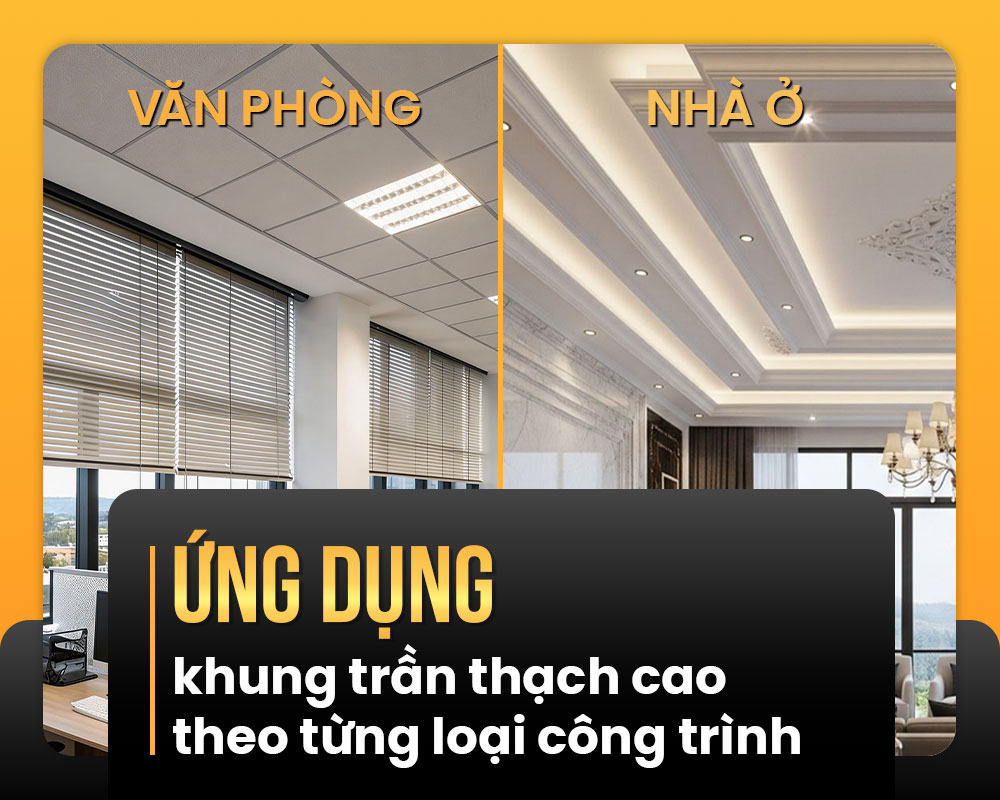
Recommendations Based on Practical Requirements
-
Residential Homes, Apartments, and Townhouses
For residential projects, concealed gypsum ceiling framing systems are the preferred choice in most cases. Their seamless surface complements a wide range of interior design styles, creating a warm and private atmosphere while allowing homeowners to incorporate stepped ceilings, light coves, and customized ceiling features. In residential buildings, M&E systems typically require less frequent maintenance, so the limited accessibility of concealed ceilings is rarely a significant concern.
-
Offices, Showrooms, and Shopping Centers
These project types can effectively combine both gypsum ceiling framing systems depending on the function of each area. Reception areas, VIP meeting rooms, and showrooms should prioritize concealed ceilings to maximize aesthetics and create a professional impression.
Open-plan offices, corridors, and technical areas are better suited to suspended ceilings, which integrate easily with panel lighting systems, HVAC equipment, and allow convenient maintenance access.
-
Schools, Hospitals, and Industrial Facilities
For public and industrial buildings, suspended gypsum ceiling systems are often the default choice. Schools and hospitals require frequent maintenance of electrical and air-conditioning systems. Suspended ceilings enable quick access without disrupting daily operations. Industrial facilities typically feature large ceiling areas and substantial technical loads that require regular access, making suspended ceiling systems the most practical solution.
VI. Important Considerations When Choosing a Gypsum Ceiling Frame
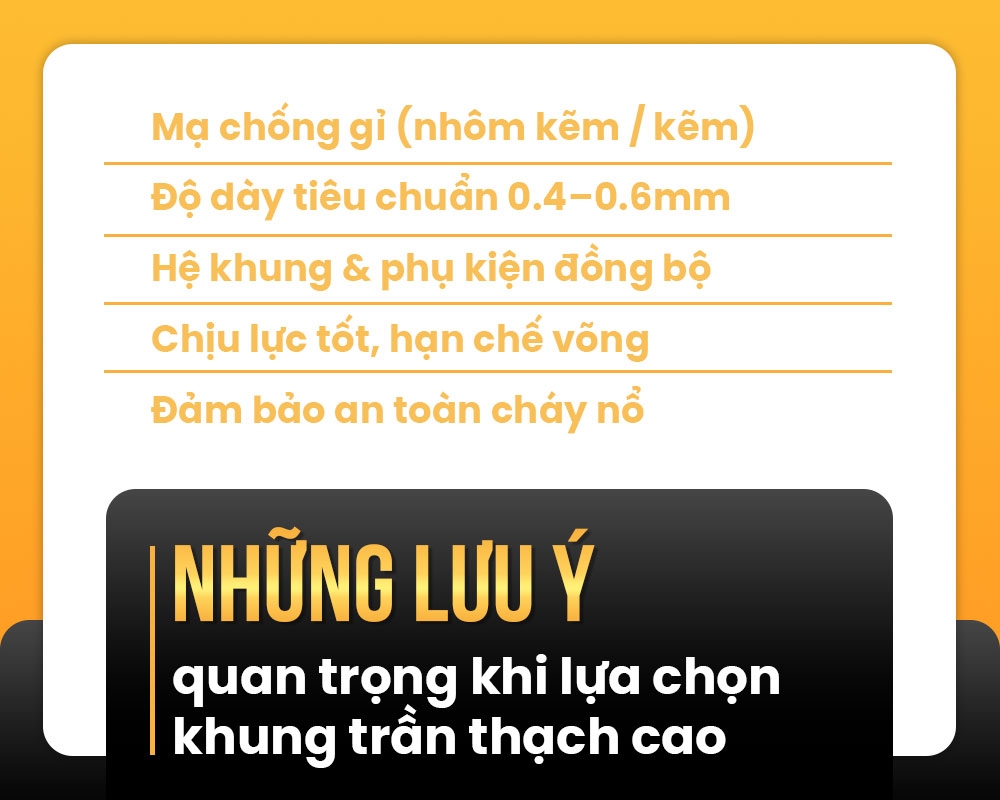
Avoid Common Installation Mistakes
Choosing the Right Frame Material for the Environment
Before selecting a gypsum ceiling frame, it is essential to determine the environmental conditions of the installation area, as these directly affect the frame’s durability.
- Dry, air-conditioned environments (offices, bedrooms): Standard galvanized steel framing is generally sufficient for durability and safety.
- High-humidity environments (bathrooms, kitchens, covered outdoor corridors): Aluminum-zinc coated steel should be selected for enhanced corrosion resistance.
- Coastal areas or facilities exposed to chemicals: Premium protective coatings or stainless steel 304 should be used to prevent corrosion.
Technical Standards and Frame Thickness
Many suppliers advertise total thickness values that include coating layers rather than the actual Base Metal Thickness (BMT). This is an important consideration when selecting a gypsum ceiling frame.
- Residential projects and apartments: CD and UD framing profiles should have a minimum thickness of 0.45 mm BMT.
- Offices, retail stores, and commercial buildings: Framing thickness should range between 0.55–0.60 mm BMT.
- Projects with heavy loads or large ceiling spans: More robust framing systems with thicknesses ranging from 0.70–1.00 mm BMT should be used.
The Importance of the Manufacturer and Technical Consultant
Not all gypsum ceiling framing products on the market meet the technical specifications claimed in their marketing materials. When selecting a supplier, verify the following:
- Does the manufacturer operate a legitimate production facility?
- Are there recognized certifications such as ISO, ASTM, JIS, or equivalent standards?
- Is the raw material sourced from reputable steel manufacturers?
- Is there a technical team capable of recommending suitable framing systems for specific projects?
- Is there a transparent warranty policy with documented commitments?
VII. Recommended Gypsum Ceiling Framing Solutions from ProMETAL
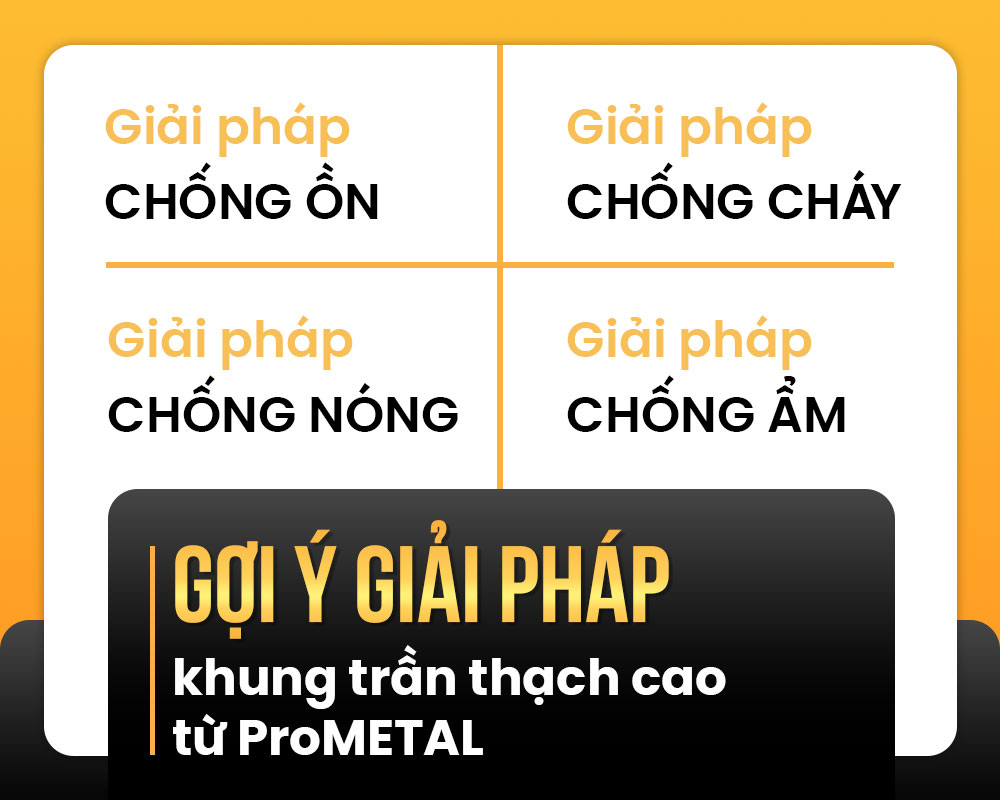
The Ideal Solution for Modern Construction Projects
-
ProMETAL Concealed and Suspended Ceiling Systems
ProMETAL gypsum ceiling framing systems are developed as comprehensive solutions rather than collections of individual components. Each system is engineered to provide integration, stability, ease of installation, and compatibility with real-world construction requirements.
For concealed ceilings, ProMETAL framing systems address aesthetic performance at its foundation. Main runners and cross members are precision-formed through mechanical manufacturing processes, ensuring exceptional straightness-the basis for achieving perfectly flat ceiling surfaces even under direct spotlight illumination. Integrated connection systems eliminate movement at joint locations, removing one of the primary causes of hairline cracking over time. Frame thicknesses are carefully engineered to prevent deformation under the weight of gypsum boards and ceiling-mounted fixtures.
For suspended ceiling applications, ProMETAL utilizes main T-bars and cross T-bars manufactured as part of a fully integrated system. This ensures precise connections from the initial installation, eliminating joint looseness that can lead to noise and ceiling irregularities over time.
-
Advantages of BlueScope Steel and ASTM-Compliant Manufacturing
The key distinction between ProMETAL gypsum ceiling framing systems and many competing products lies in the combination of premium materials and rigorous manufacturing standards.
Imported Australian BlueScope steel is coated with an optimized aluminum-zinc alloy that delivers outstanding corrosion resistance. The structural durability of the framing system exceeds 20 years, virtually eliminating repair costs associated with corrosion or deformation after project completion. The entire production process complies with ASTM standards (USA), ensuring dimensional accuracy and consistency for every framing component manufactured.
ProMETAL is a gypsum ceiling frame manufacturer in Vietnam under Hiep Vinh Phu Joint Stock Company, with more than 25 years of industry experience and a modern manufacturing system that ensures reliable product availability.
-
Technical Consultation and Project Support
ProMETAL gypsum ceiling framing solutions go beyond material supply.
With over 25 years of practical experience, the ProMETAL technical team works alongside project owners and contractors from the design stage through project completion.
Services include:
- Recommending the most suitable ProMETAL gypsum ceiling framing system based on project type, design requirements, and environmental conditions.
- Providing technical drawings and material testing documentation.
- Assisting with material quantity calculations to minimize waste and unexpected costs.
- Offering continuous technical support throughout the project to ensure smooth and reliable installation.
VIII. Conclusion
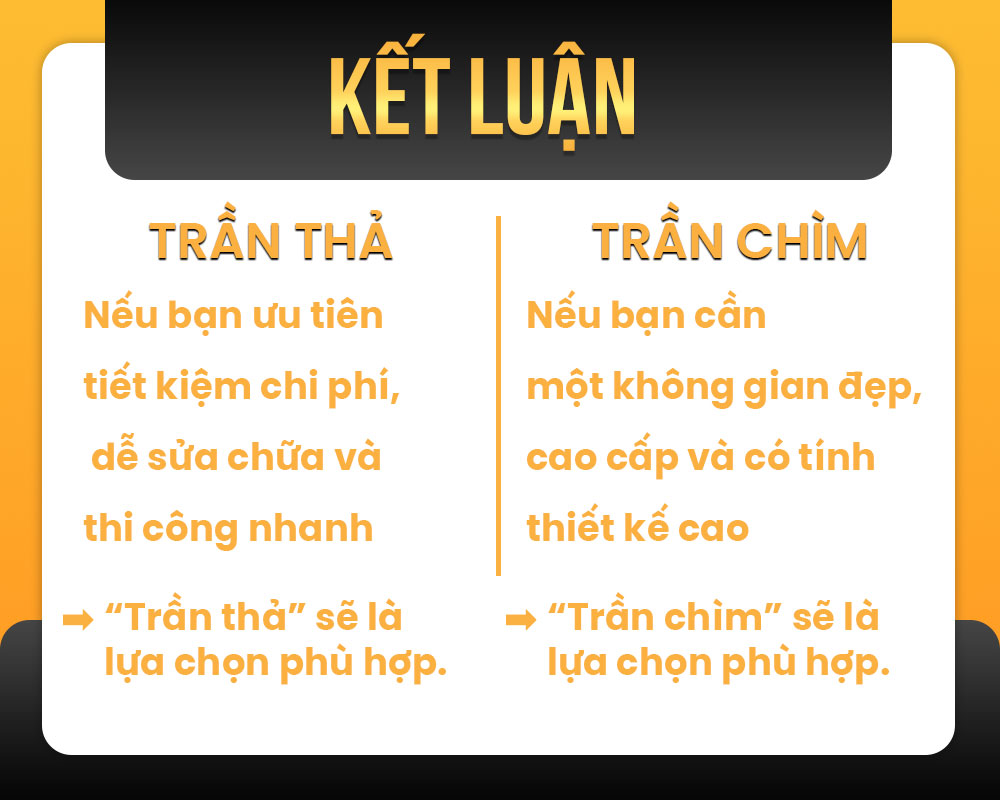
Choosing the Right Ceiling System to Optimize Aesthetics and Functionality
A gypsum ceiling frame is the core technical component that determines the durability, flatness, and safety of the finished ceiling system.
Whether your project is a residential home or a large commercial development, investing in the right gypsum ceiling framing system from the outset can significantly reduce long-term maintenance and repair costs.
Concealed ceilings and suspended ceilings are not competing solutions-they are two systems designed to serve different functional requirements.
When making your selection, pay close attention to: The type of steel used, Actual BMT thickness, Manufacturing standards, Suitability for environmental conditions, Supplier reputation
Contact ProMETAL for Expert Ceiling System Consultation
ProMETAL gypsum ceiling framing systems-built on internationally recognized materials, advanced manufacturing processes, and more than 25 years of practical industry experience-are ready to support your project from technical consultation through material supply.
📞 Hotline: 0911 674 779
🌐 Website: prometal.com.vn
📩 Email: sales@prometal.com.vn